Place · May 18, 2026
The Hells of Beppu
Our route through the Beppu Hells, including transport, combination tickets, stamp collecting, visit order, timing, photos and videos.
We left from the east exit of Beppu Station on bus 26 or 26A.
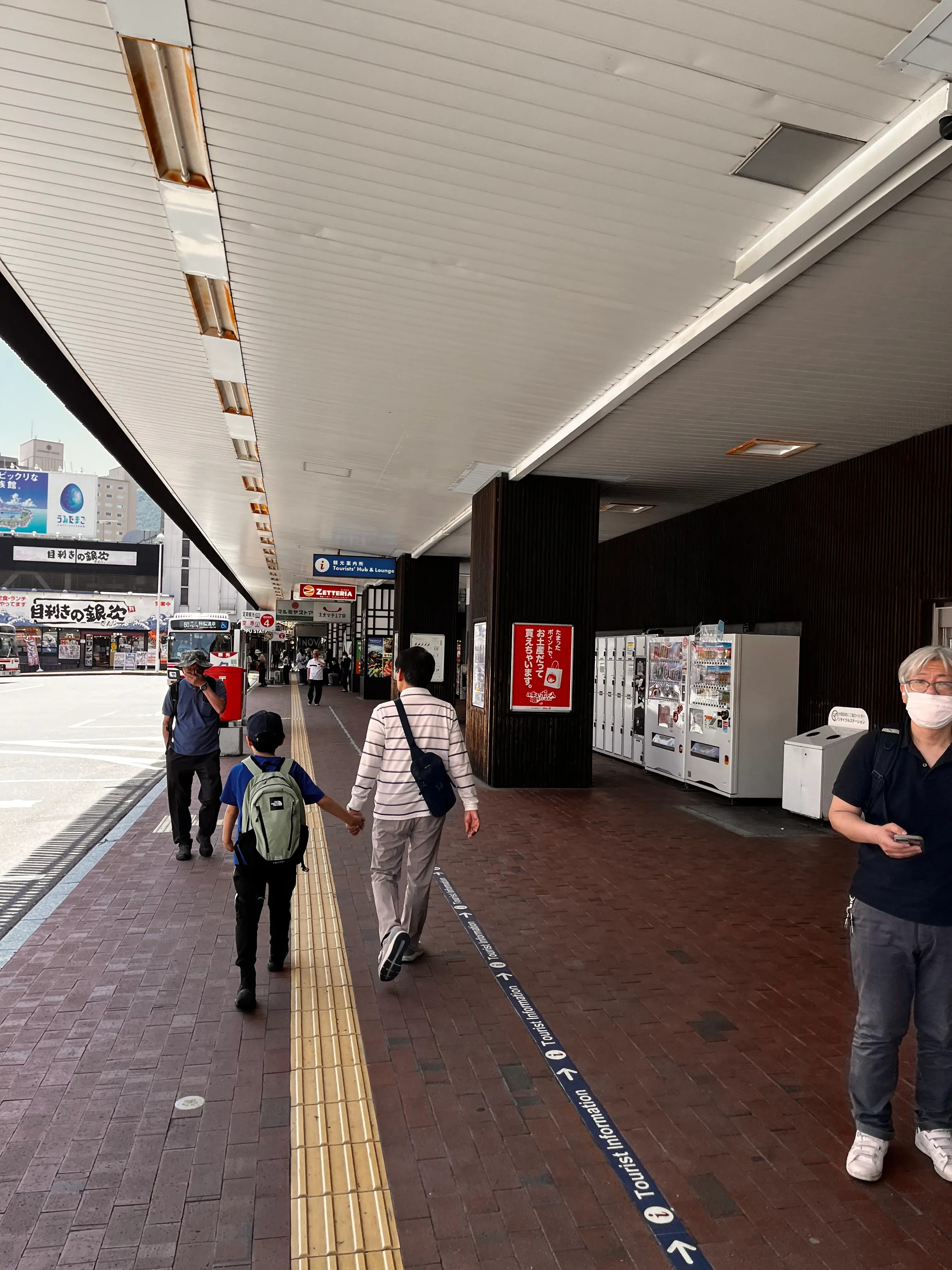
Read my detailed notes from the Beppu Tourist Information Centre
The bus was just about to leave, but the driver kindly waited for us.
The coastal views along the way were beautiful, and we even saw a cruise ship.
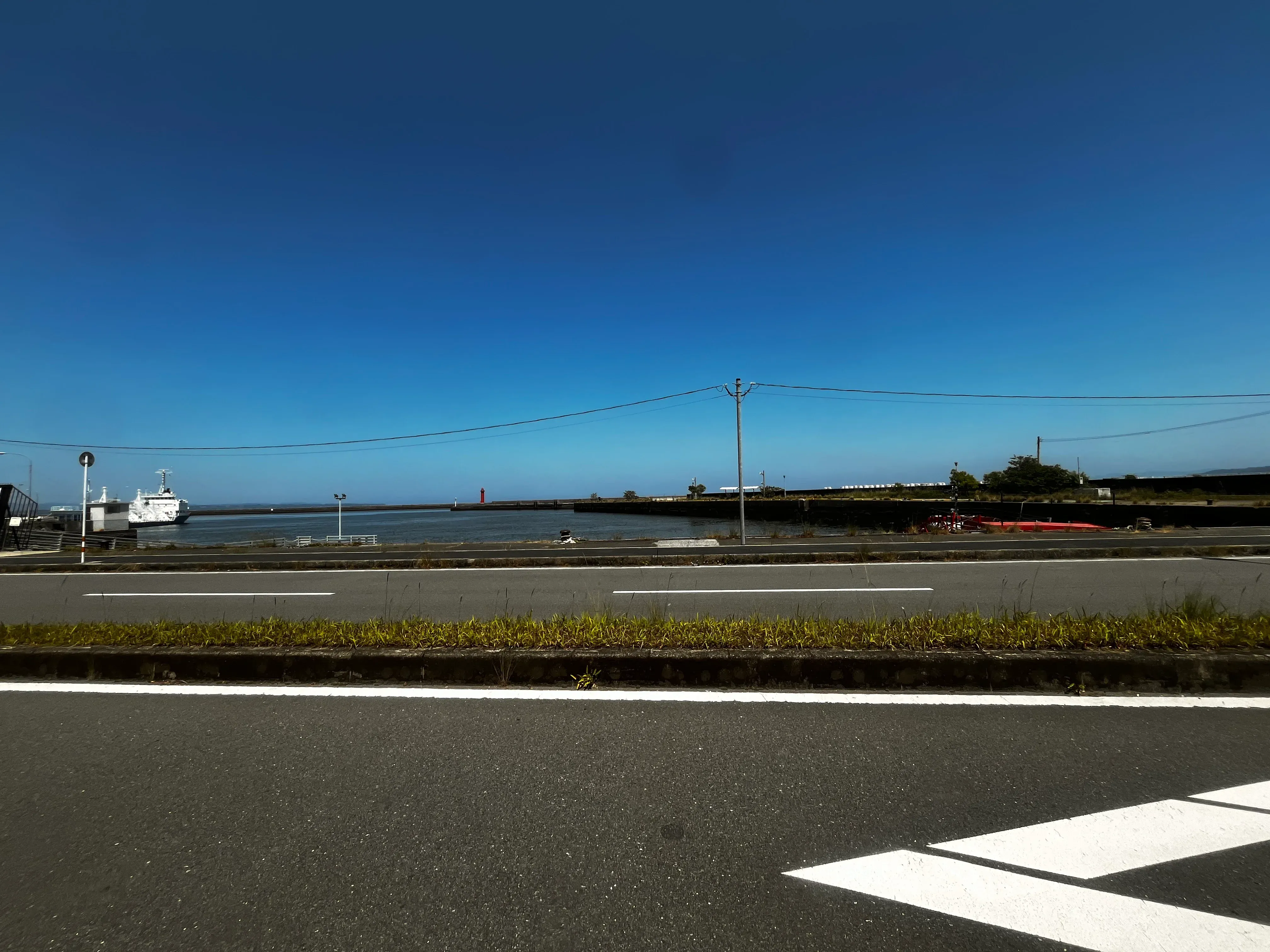
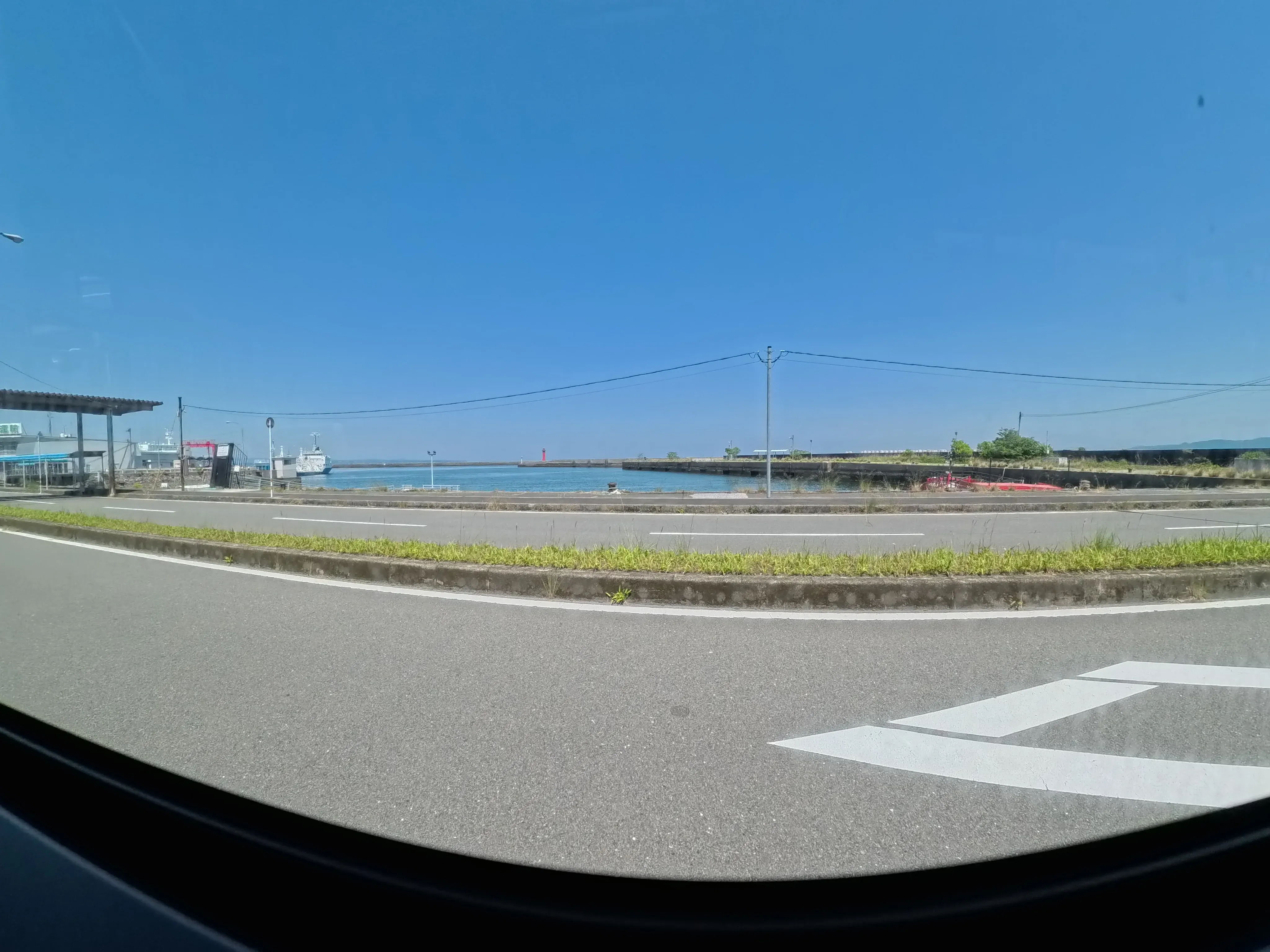
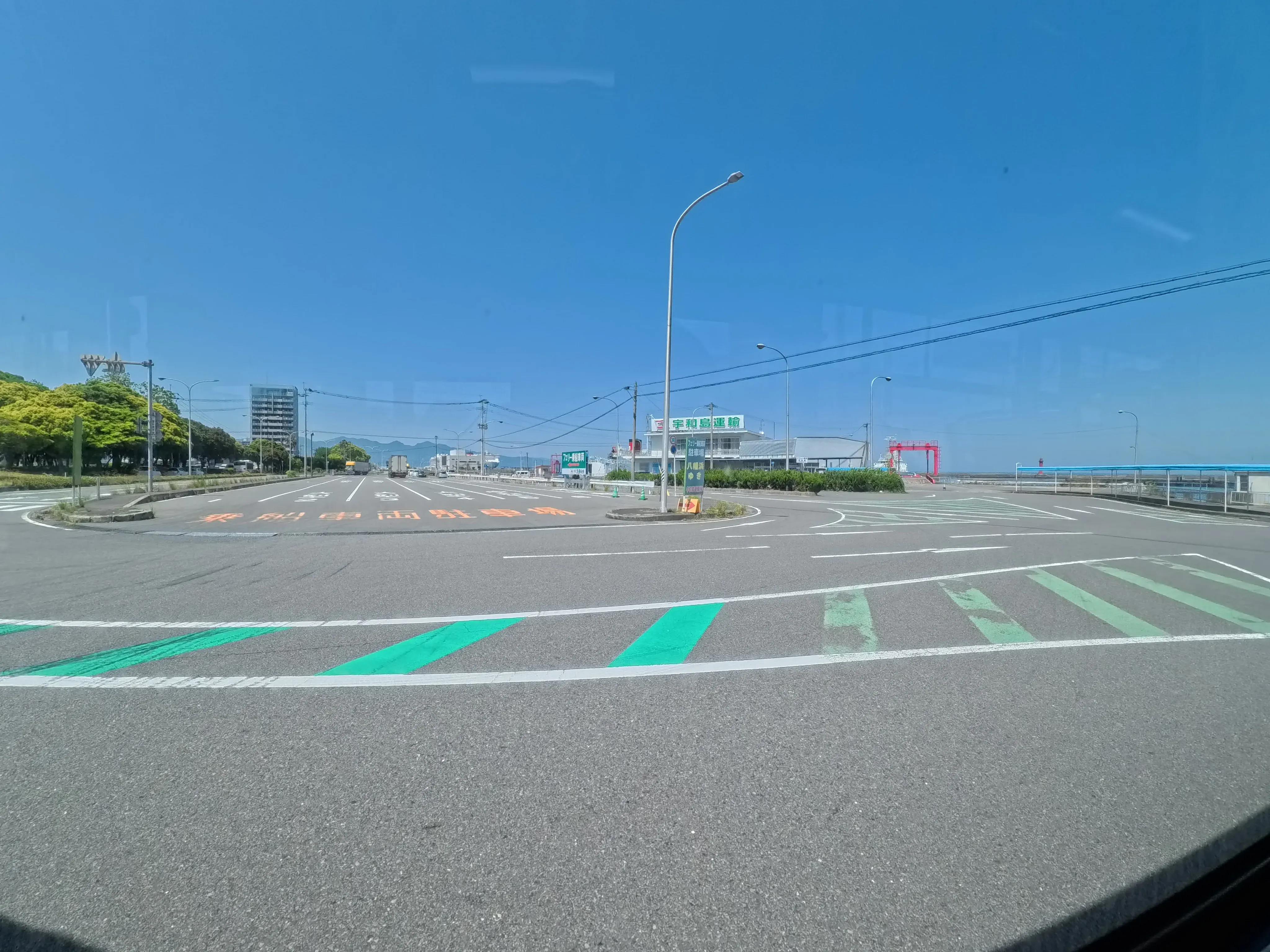
We got off at the Chinoike Jigoku-mae bus stop.
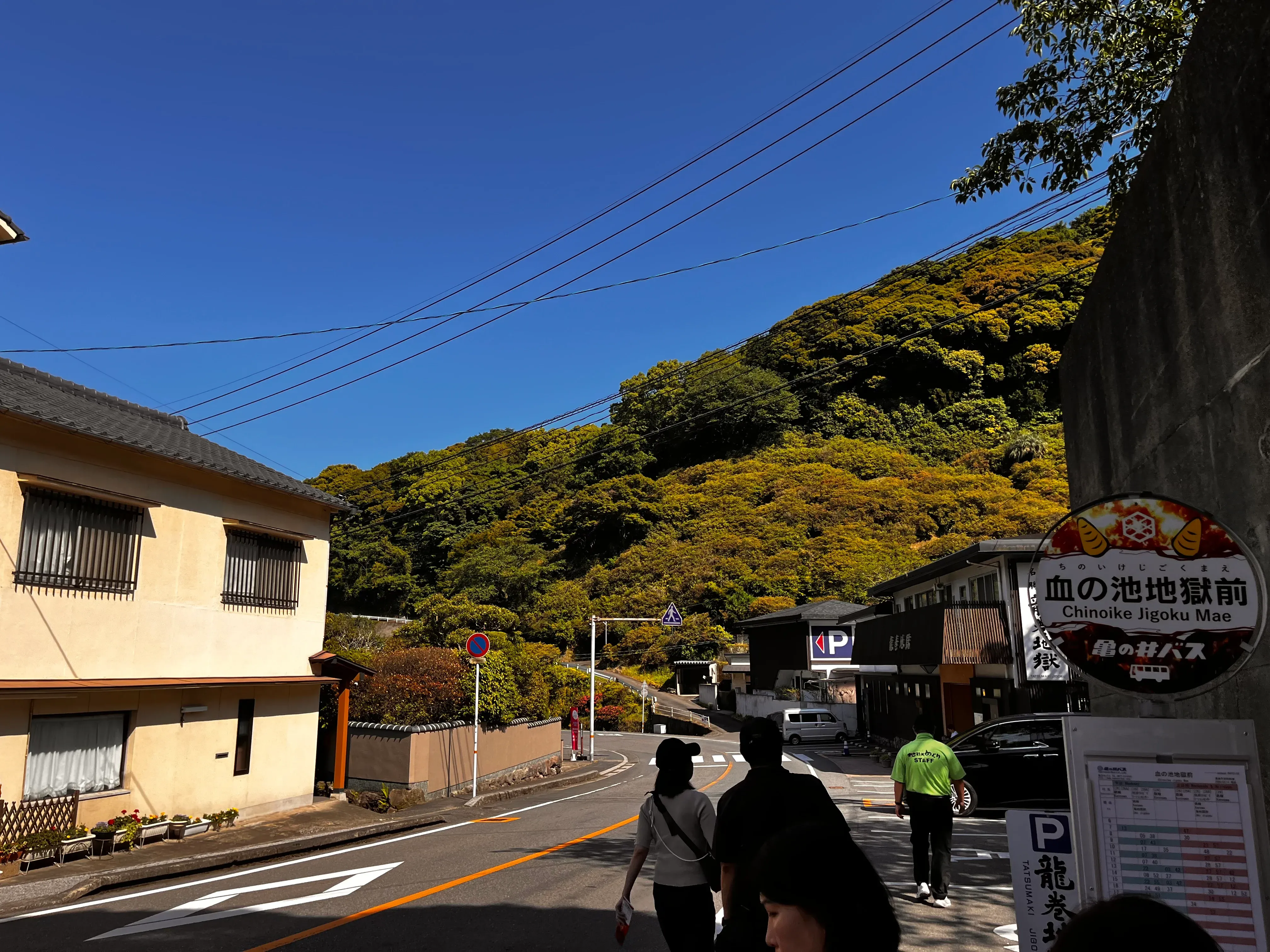
Tatsumaki Jigoku and Chinoike Jigoku are less than ten metres apart.
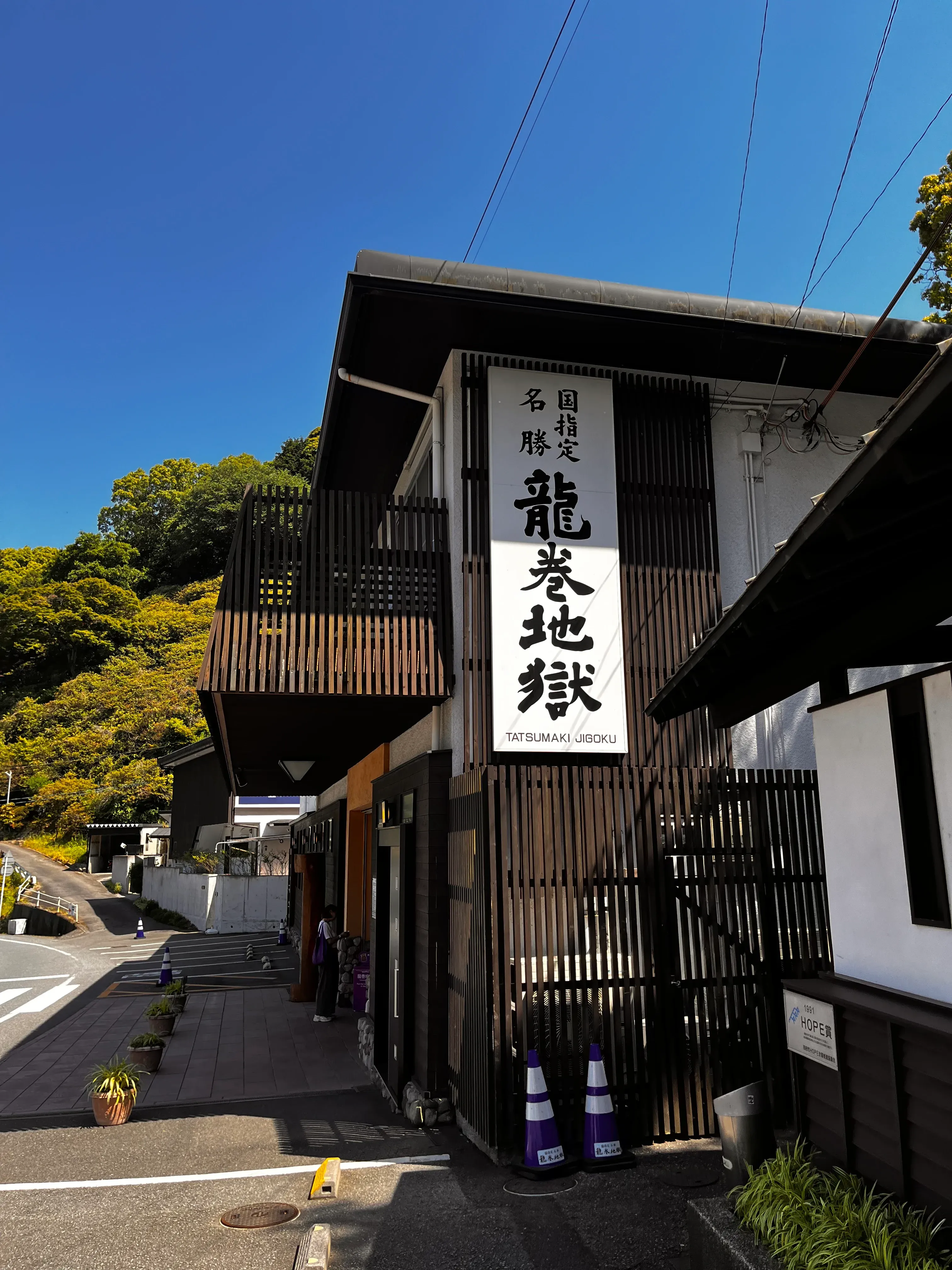
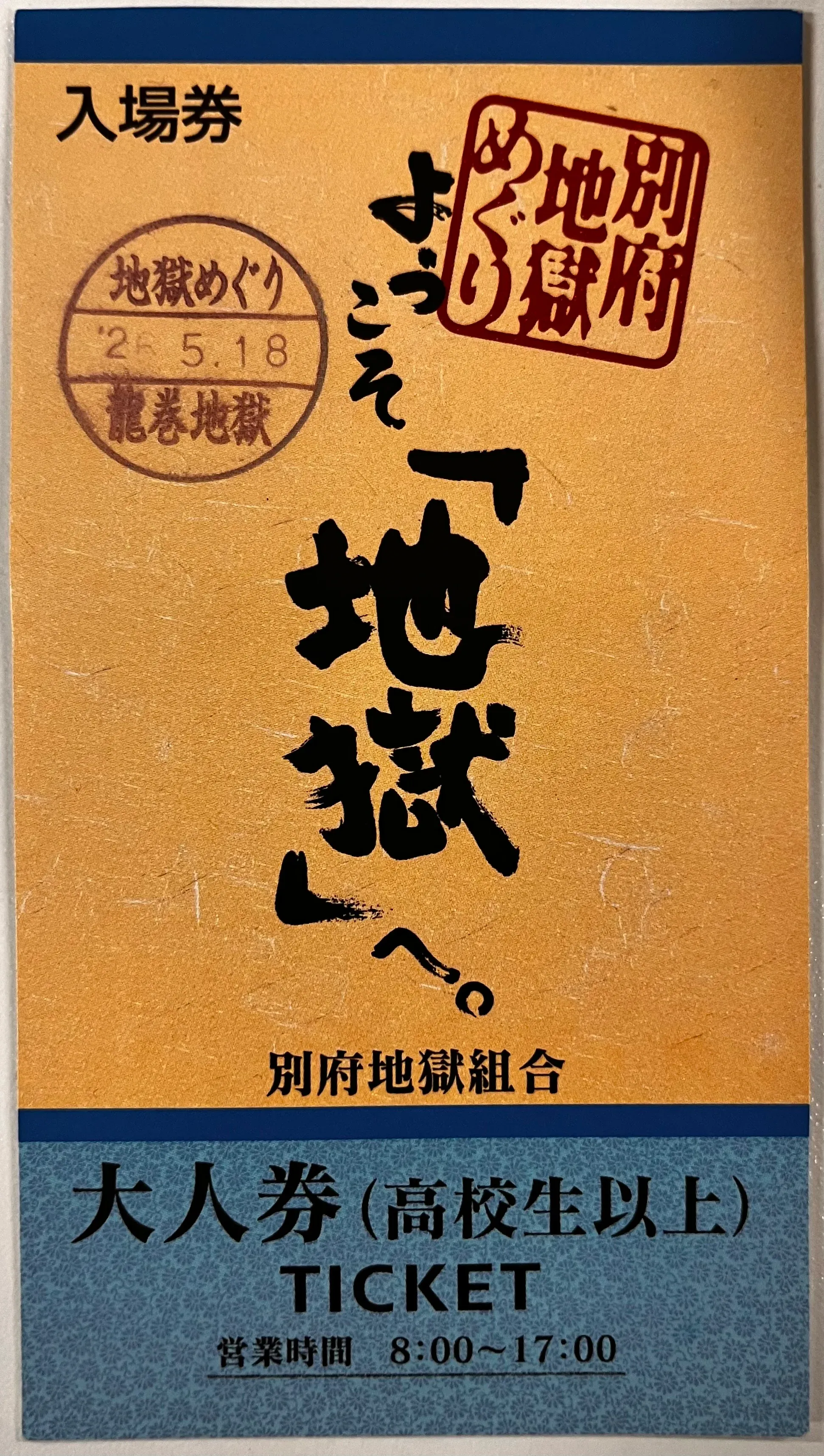
We first bought a combination ticket at Tatsumaki Jigoku. If you plan to visit all seven hells, the pass saves a few hundred yen compared with separate tickets.
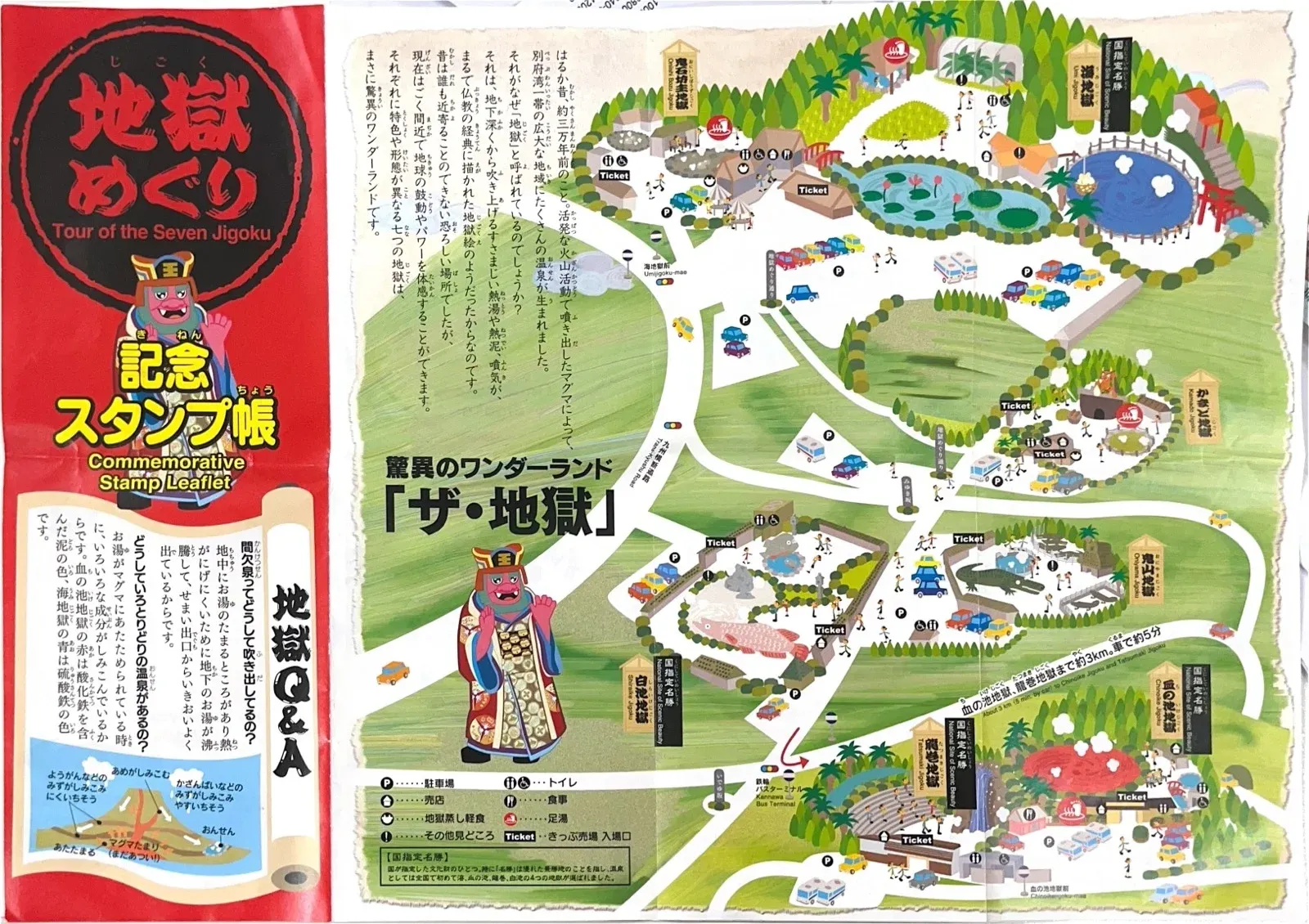
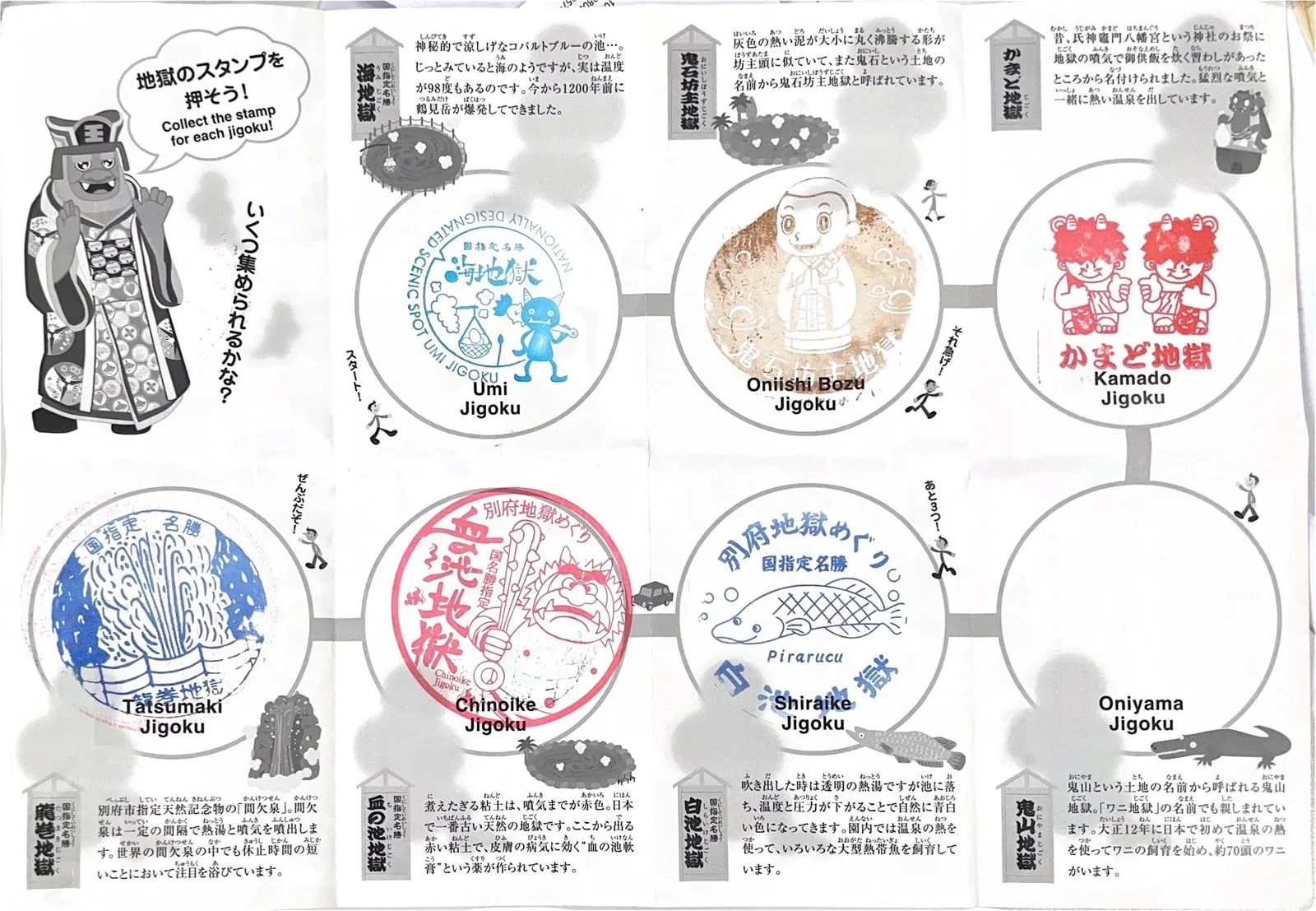
They gave us a leaflet for collecting stamps.
There was also an introduction board.
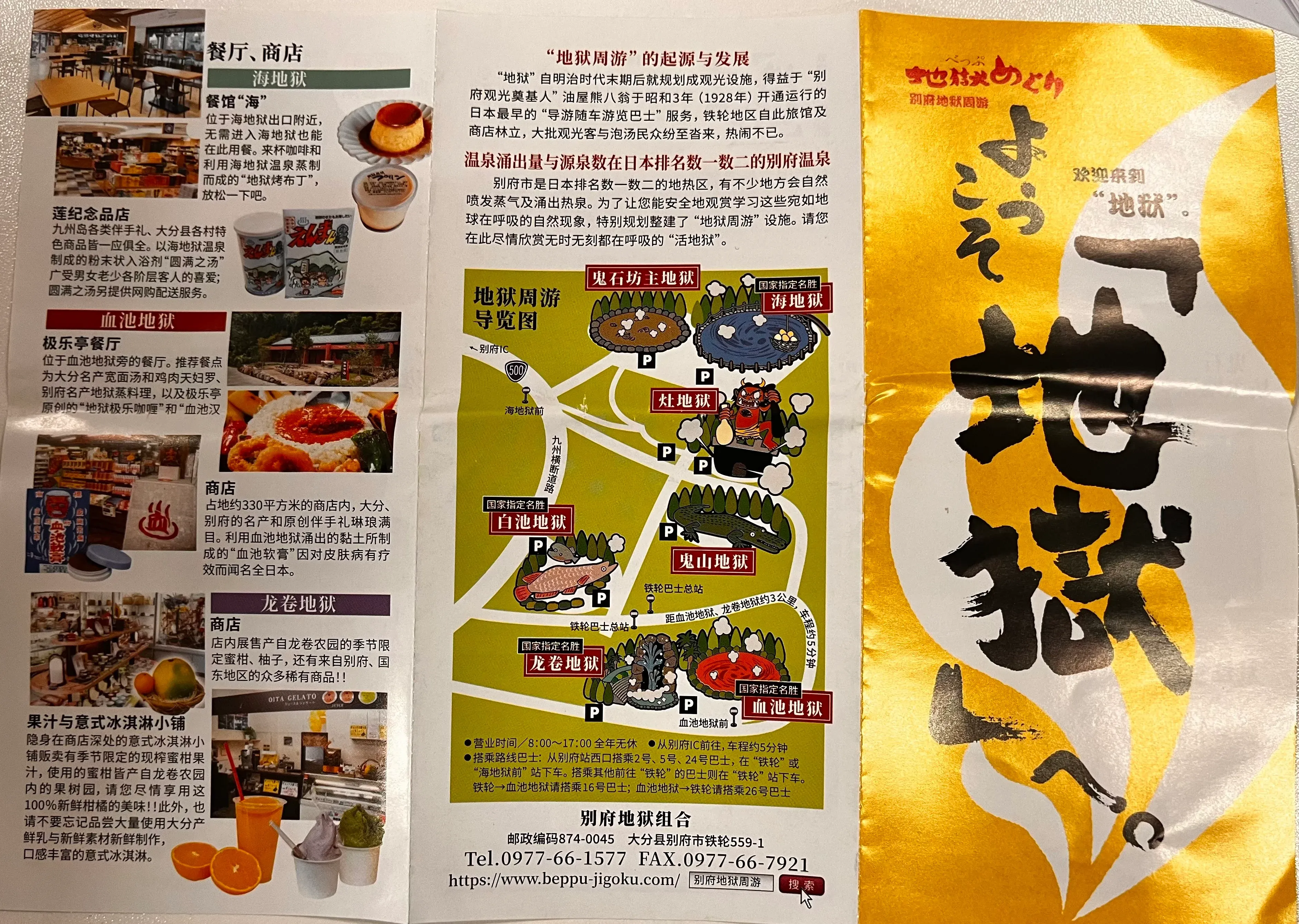
After we bought the pass, the staff told us the geyser at Tatsumaki Jigoku would erupt in 20 minutes and suggested visiting Chinoike Jigoku first.
Tear off each ticket stub yourself and place it in the collection box.
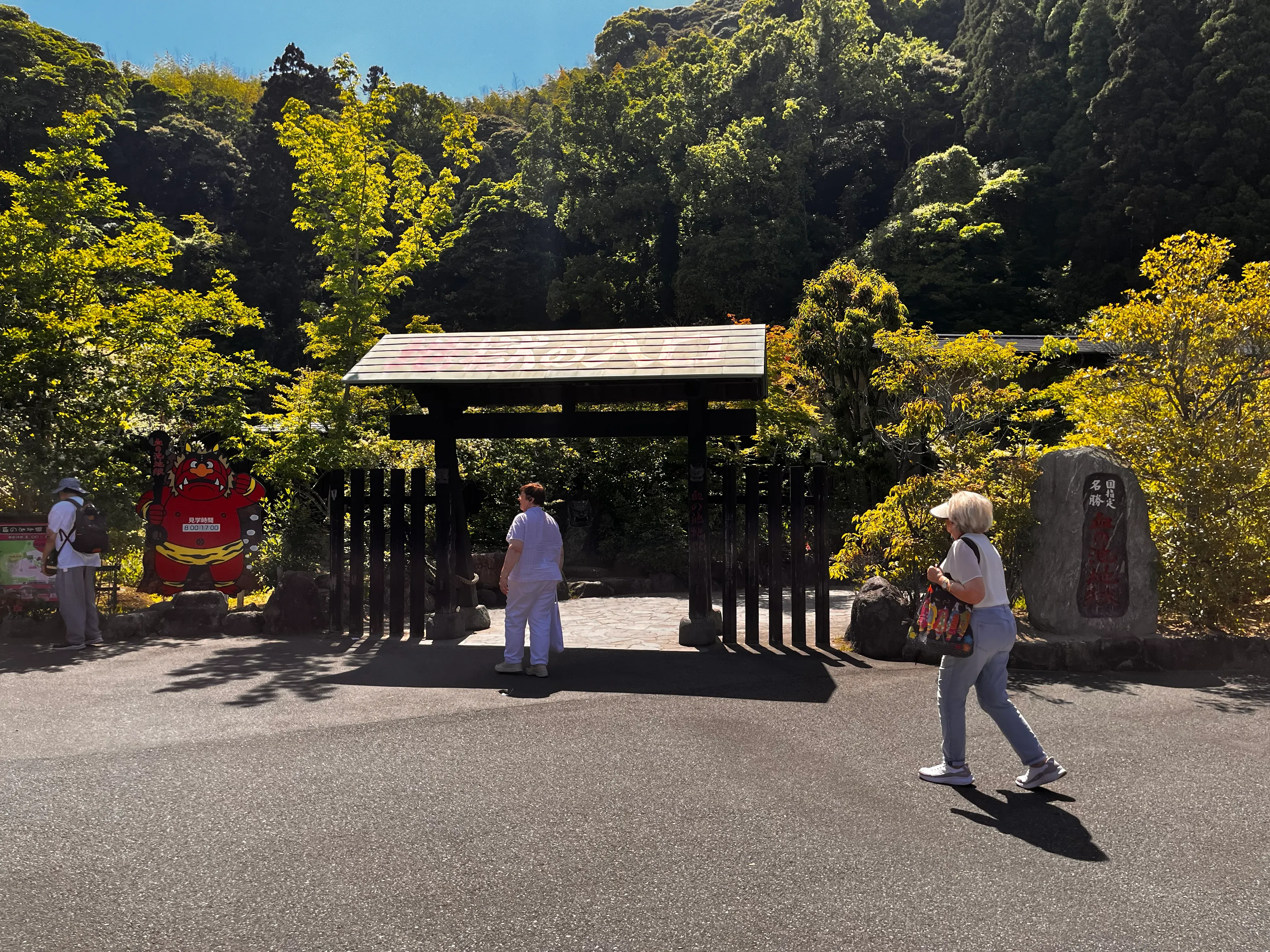
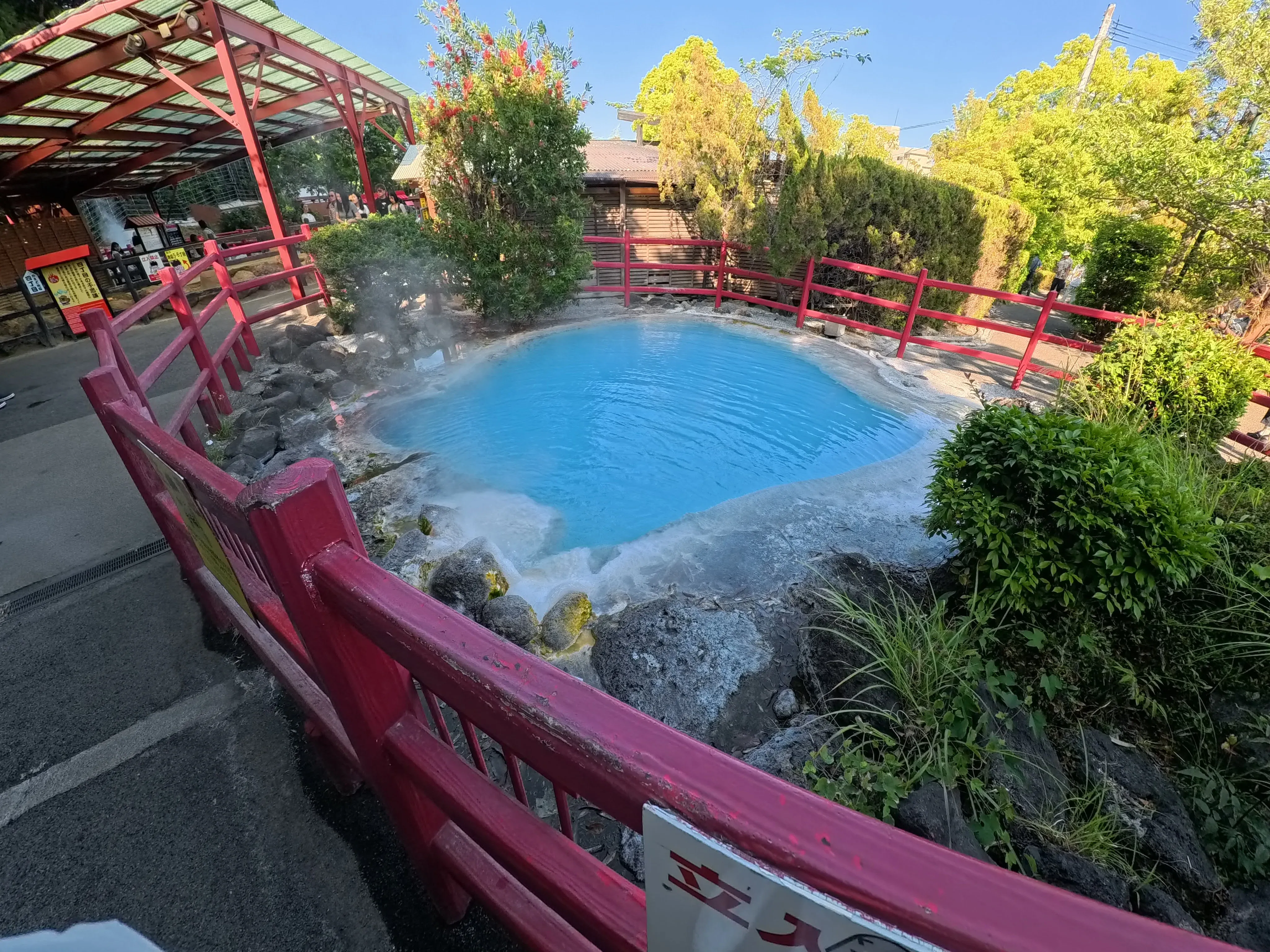
Chinoike Jigoku
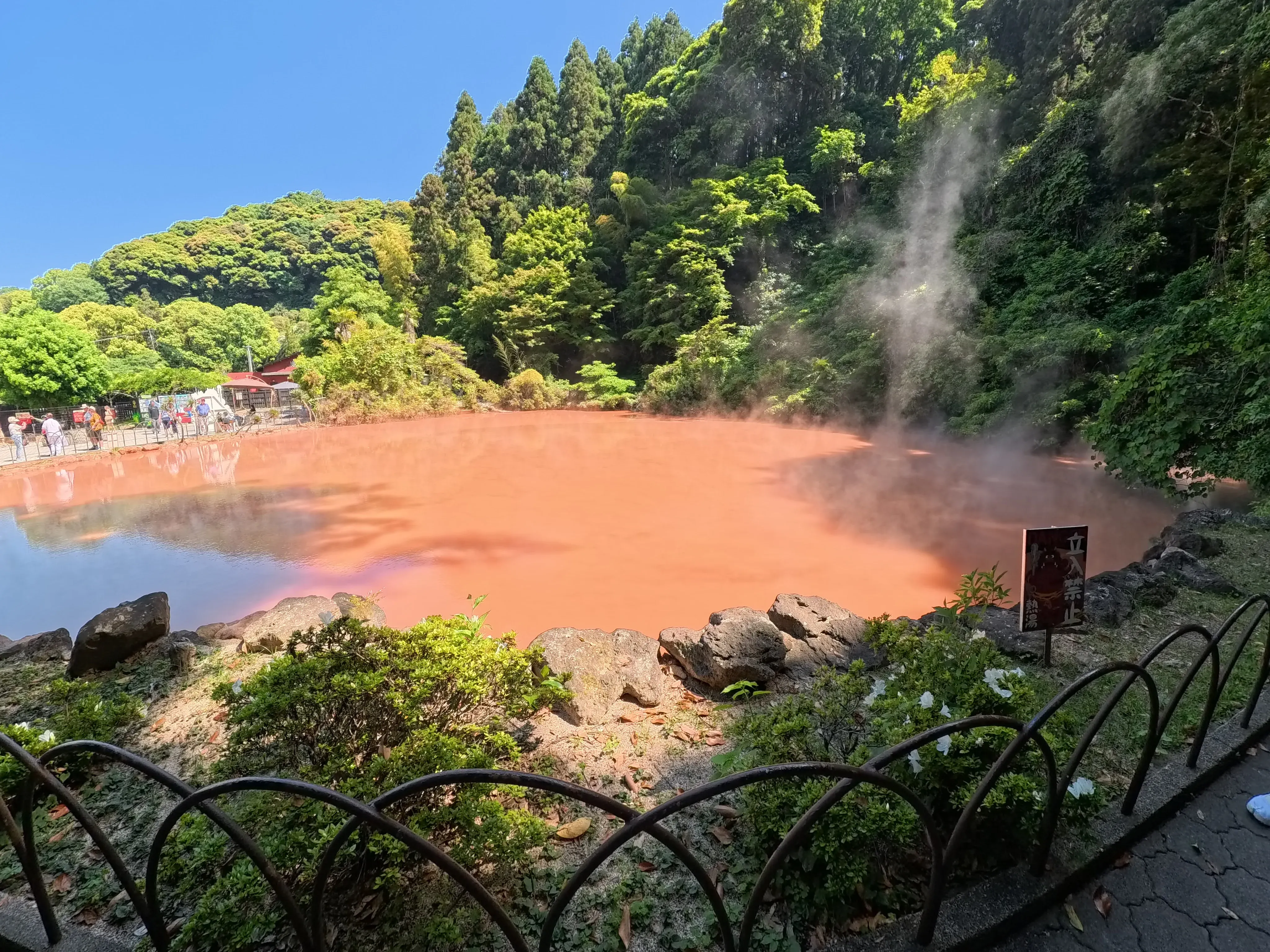
Climb the stairs for a view looking down over the hot spring.
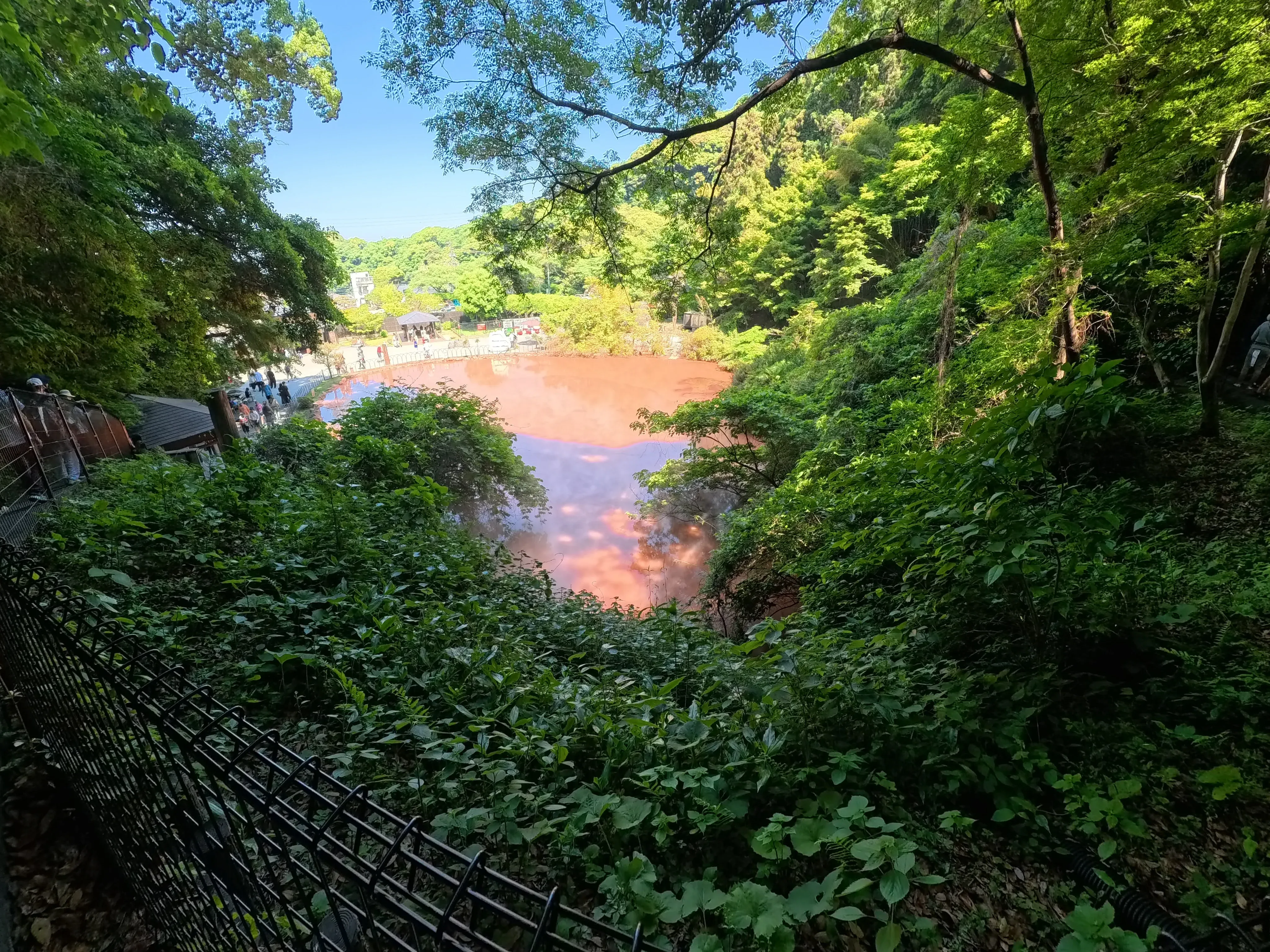
We did not watch the time closely, so we only saw the main pool and missed some of the shops inside. For fun, I bought one of their bright red Chinoike mosquito coils.
This was one of the small shops.
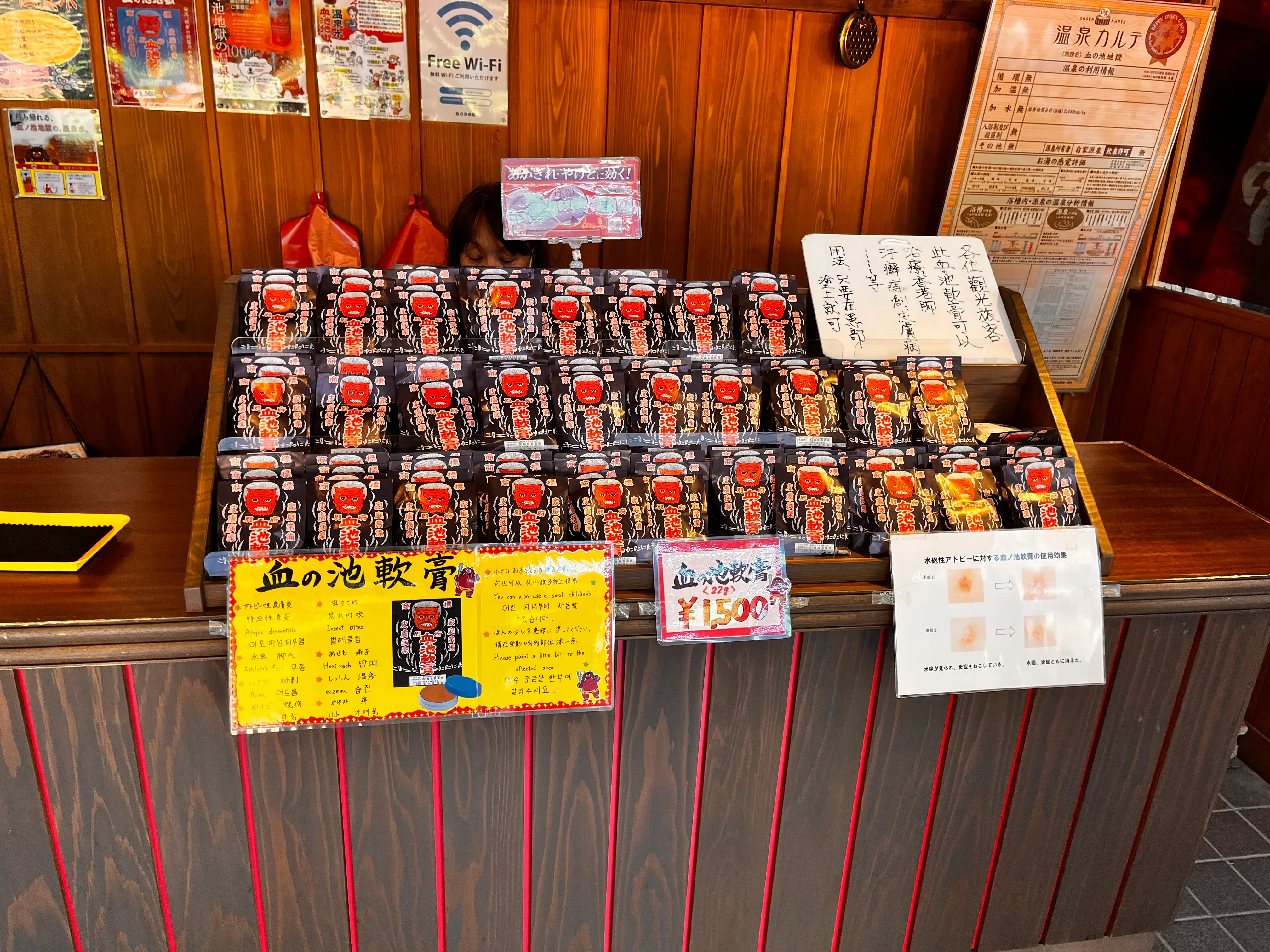
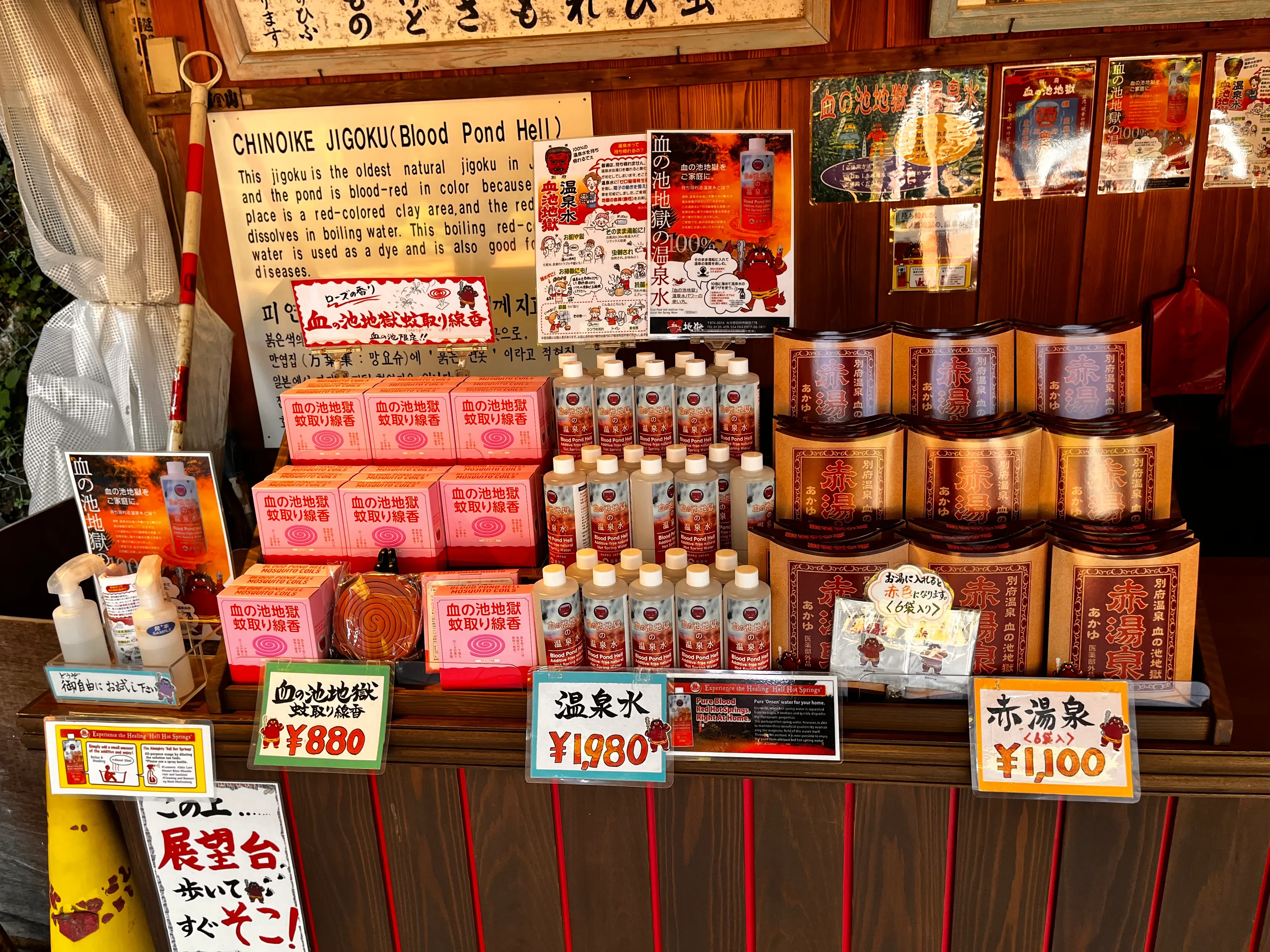
Tatsumaki Jigoku
We returned to Tatsumaki Jigoku. The moment the geyser erupted was genuinely impressive.
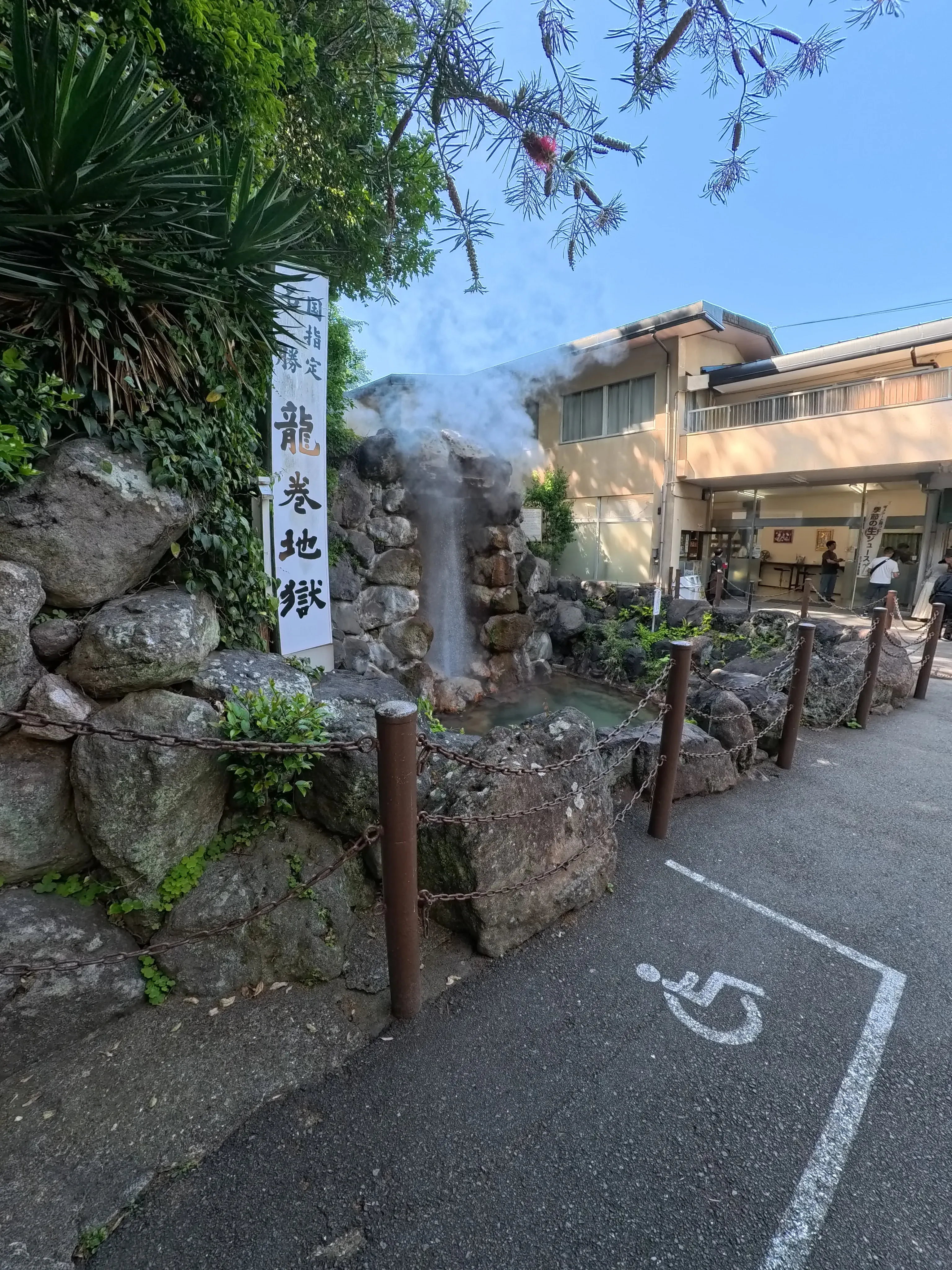
The best part was watching the steam build before the water burst out a second or two later.
The eruption continued for around five to ten minutes.
After it finished, many visitors collected a stamp as a souvenir.
Many people favour the blue, white and red hells, but Tatsumaki Jigoku was the most dynamic and dramatic one for me.
After seeing those two, we took a bus to visit the remaining five.
Tip: Get off at the Umi Jigoku-mae stop. Starting at the top and walking downhill is much less tiring.
Cross the road, walk through the car park and continue slightly uphill to reach Umi Jigoku.
Umi Jigoku
Umi Jigoku is quite large, with a lotus pond outside.
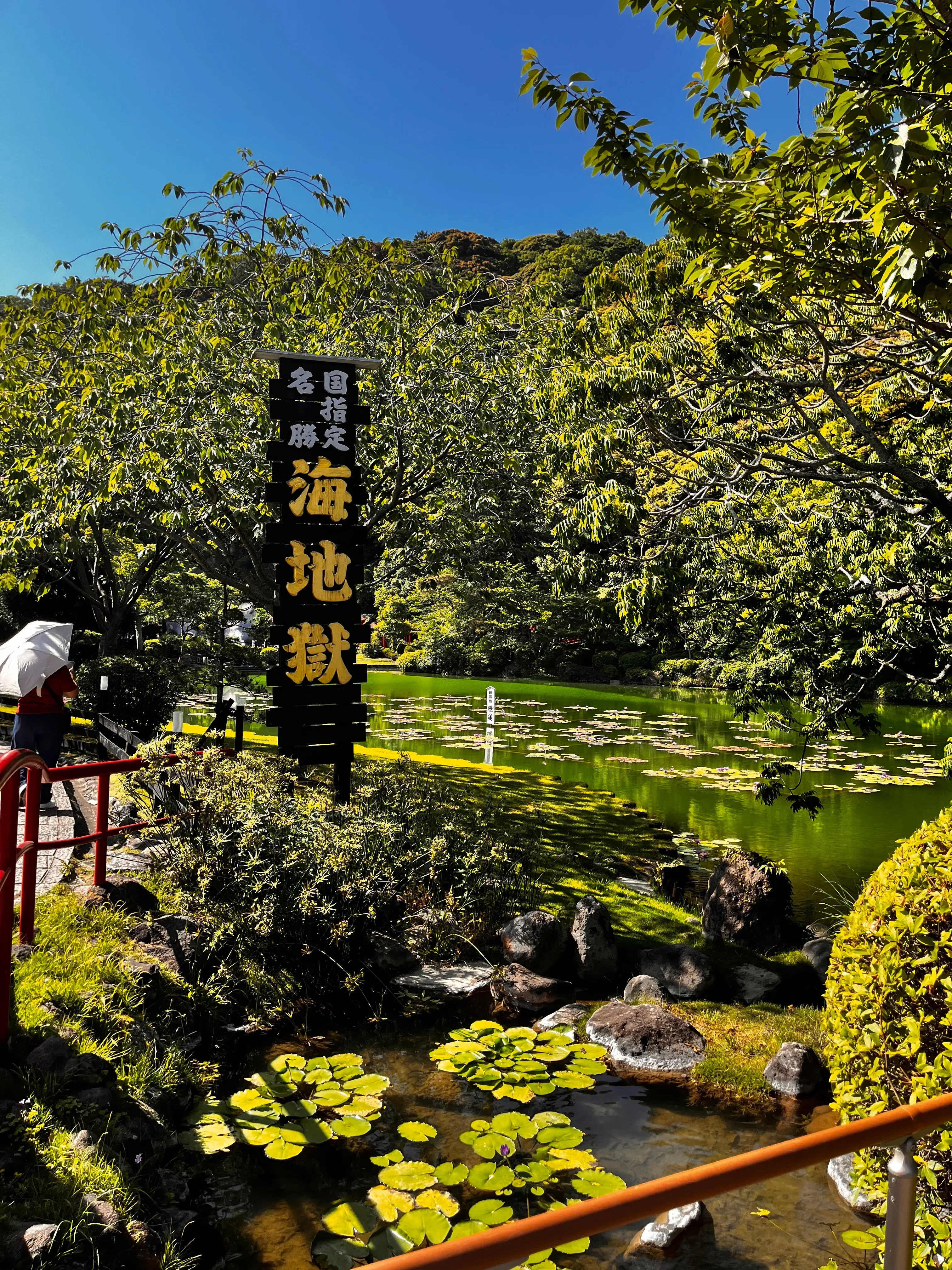
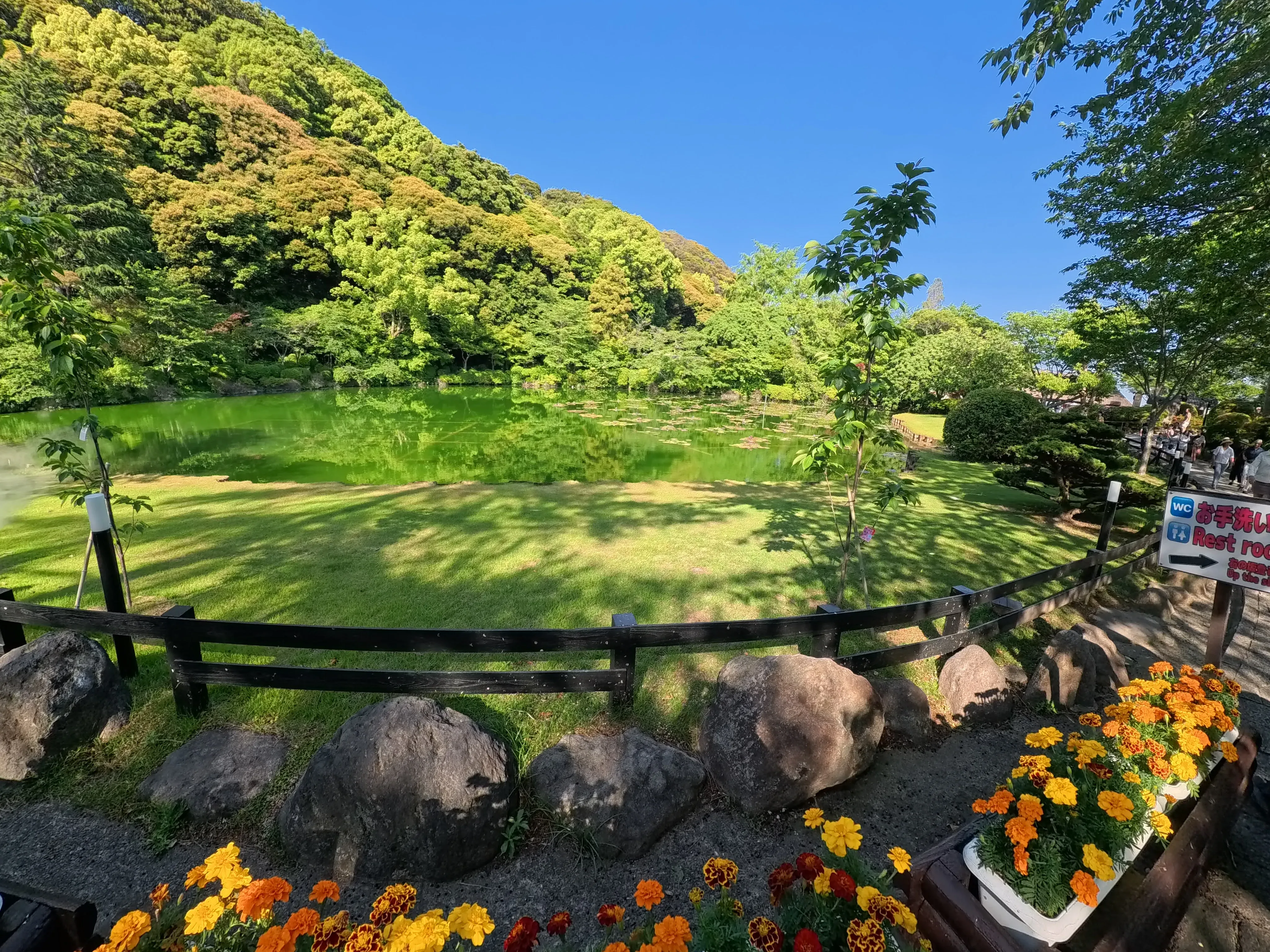
After walking through the shop, you reach Umi Jigoku. The blue colour is beautiful.
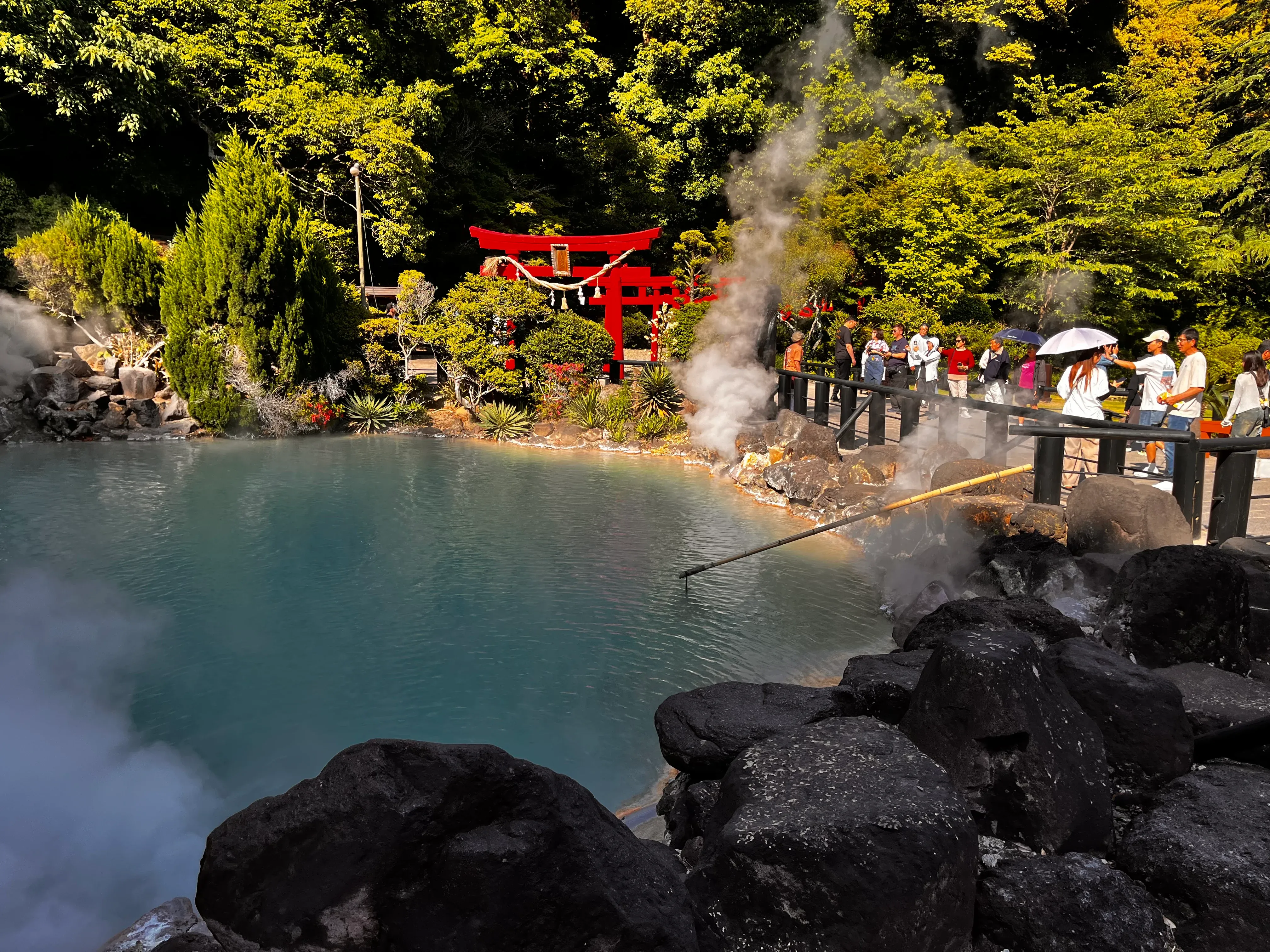
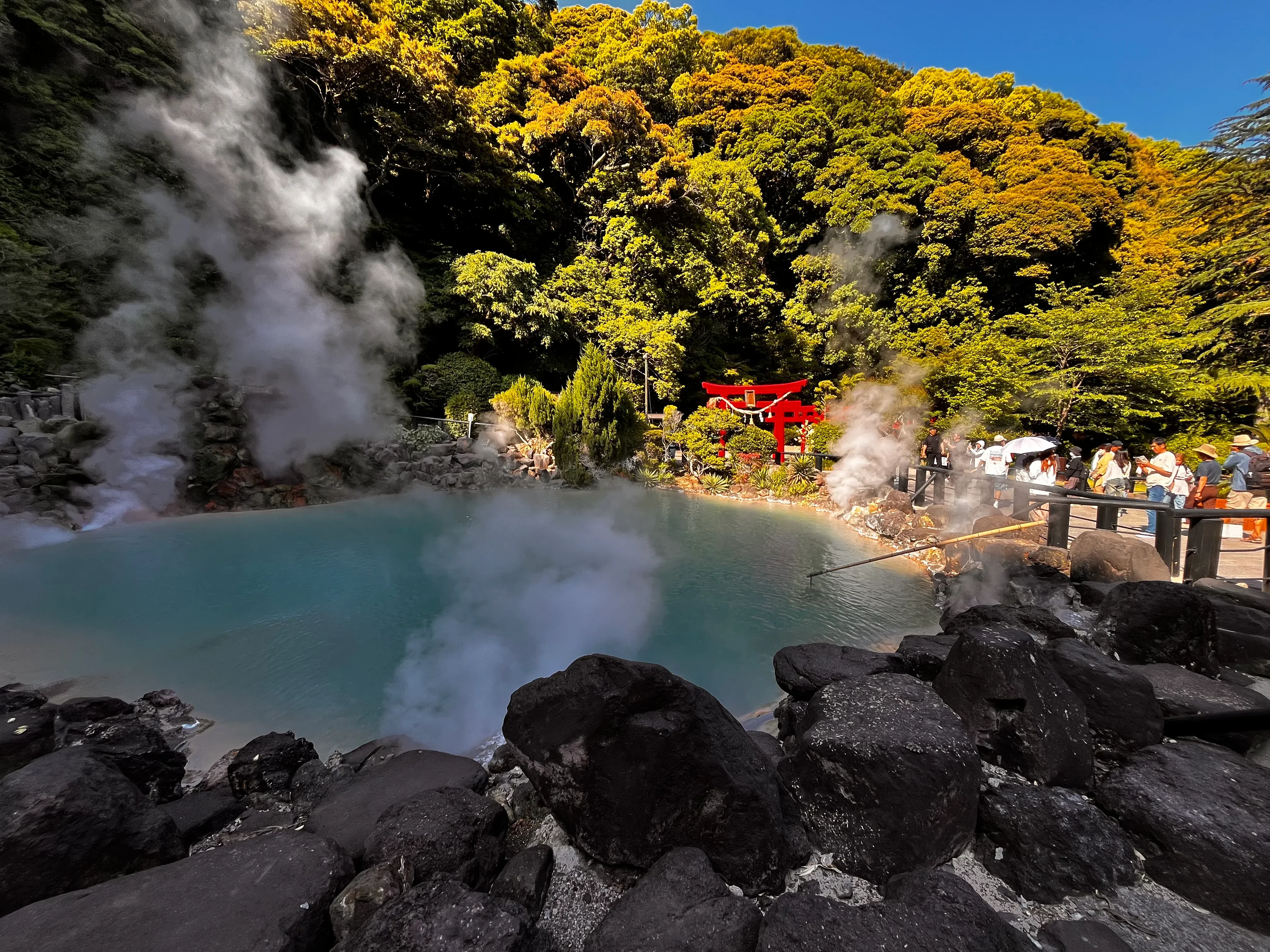
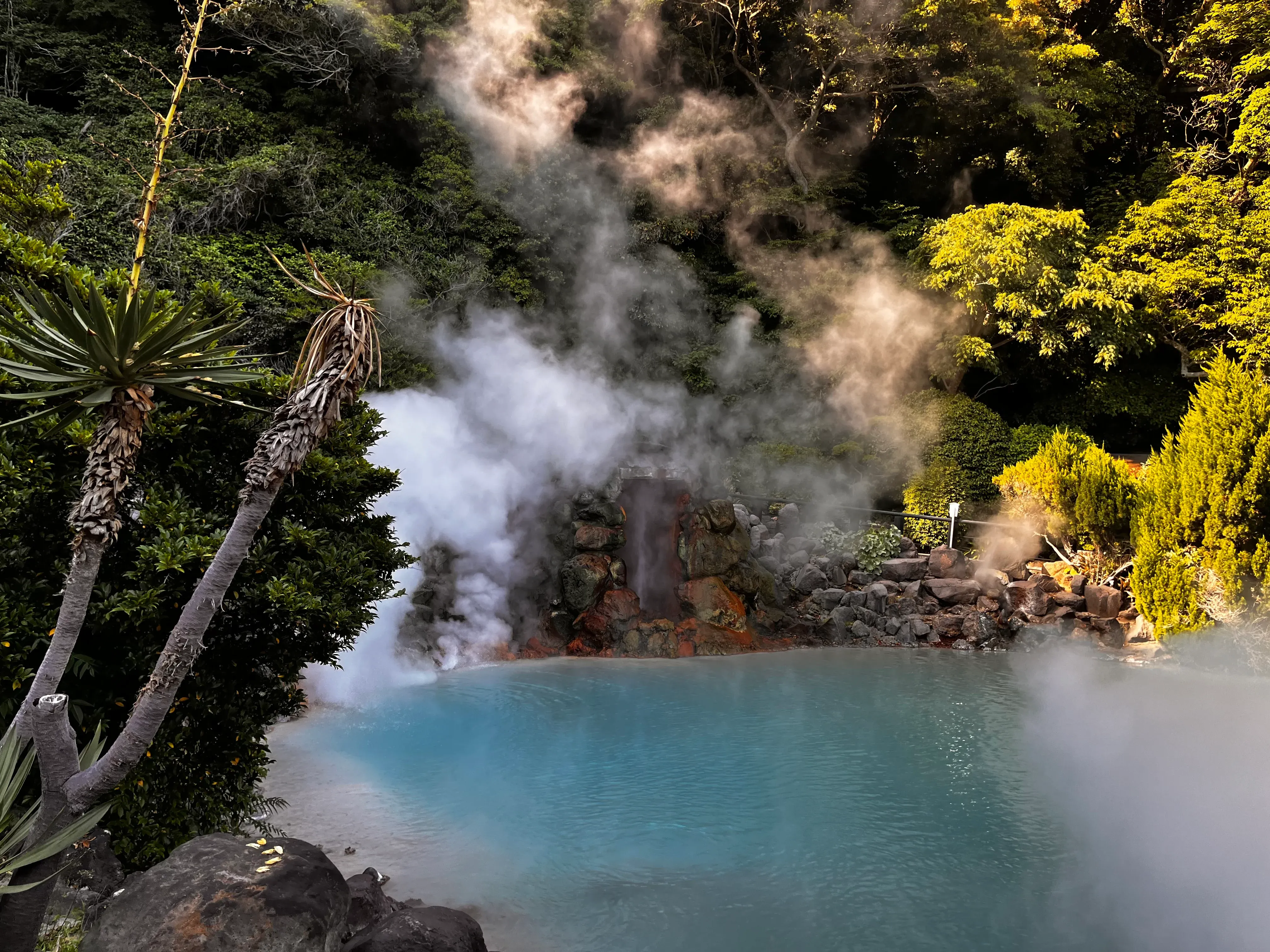
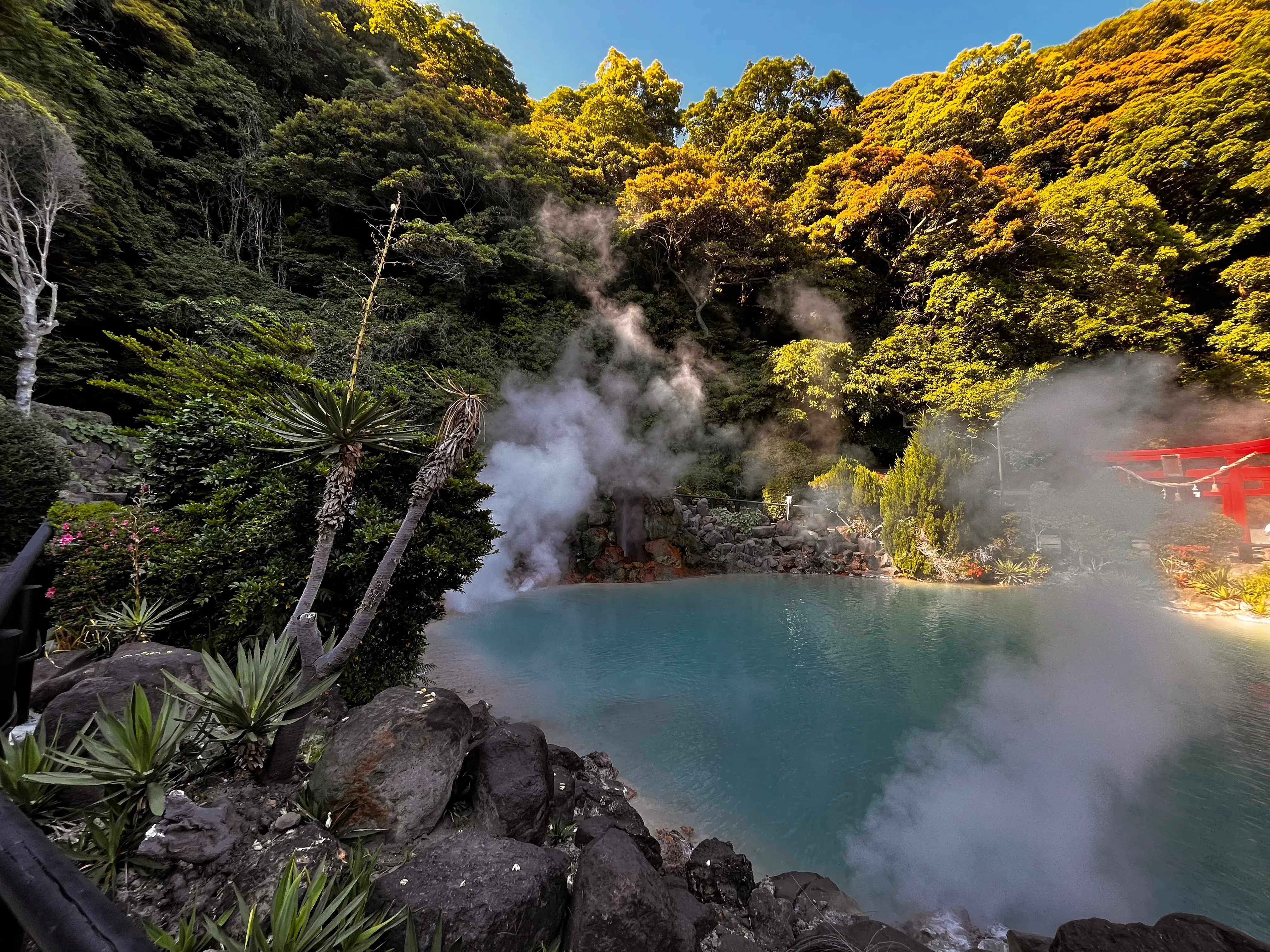
We then saw a torii gate.
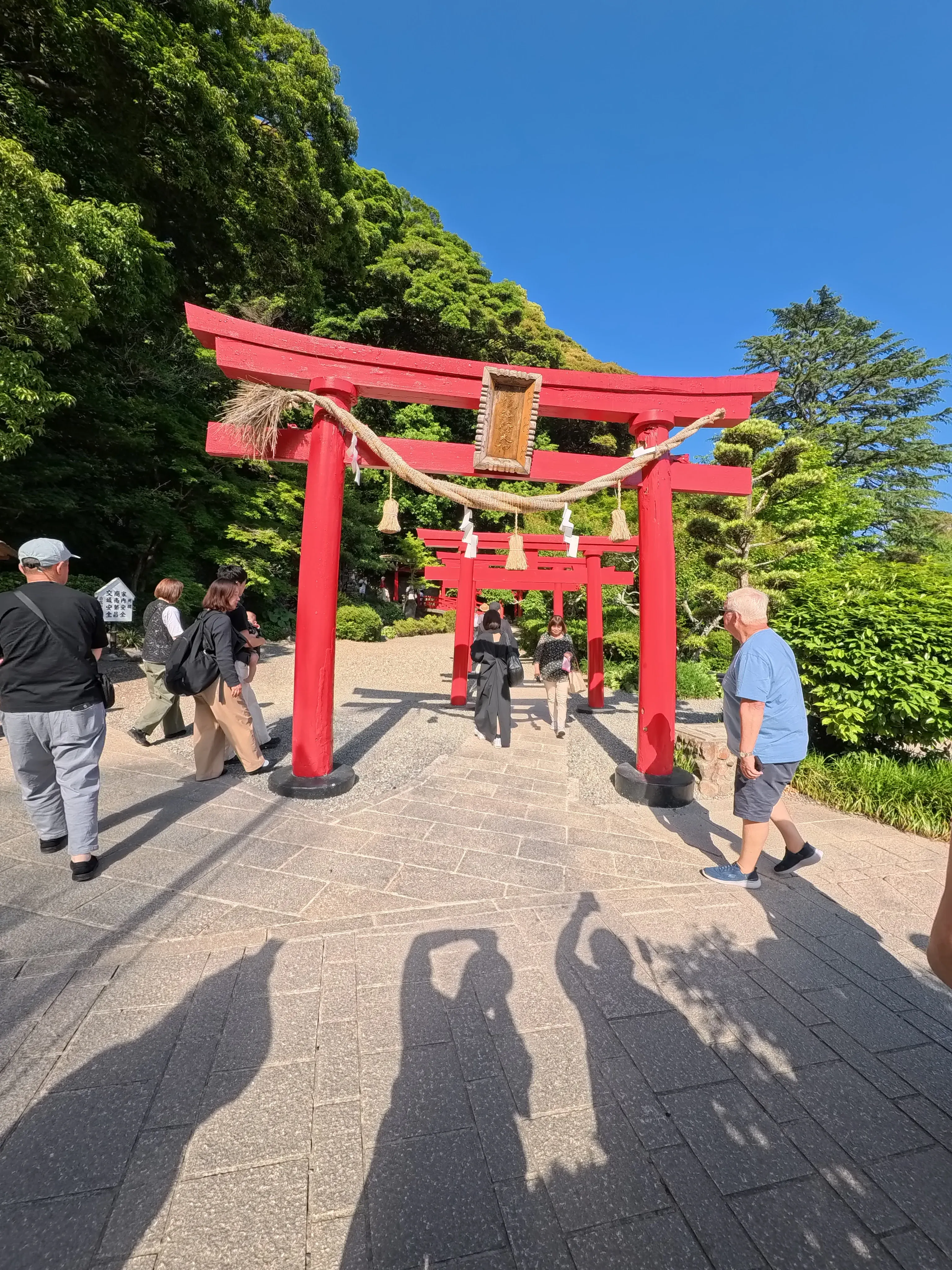
Continue farther inside.
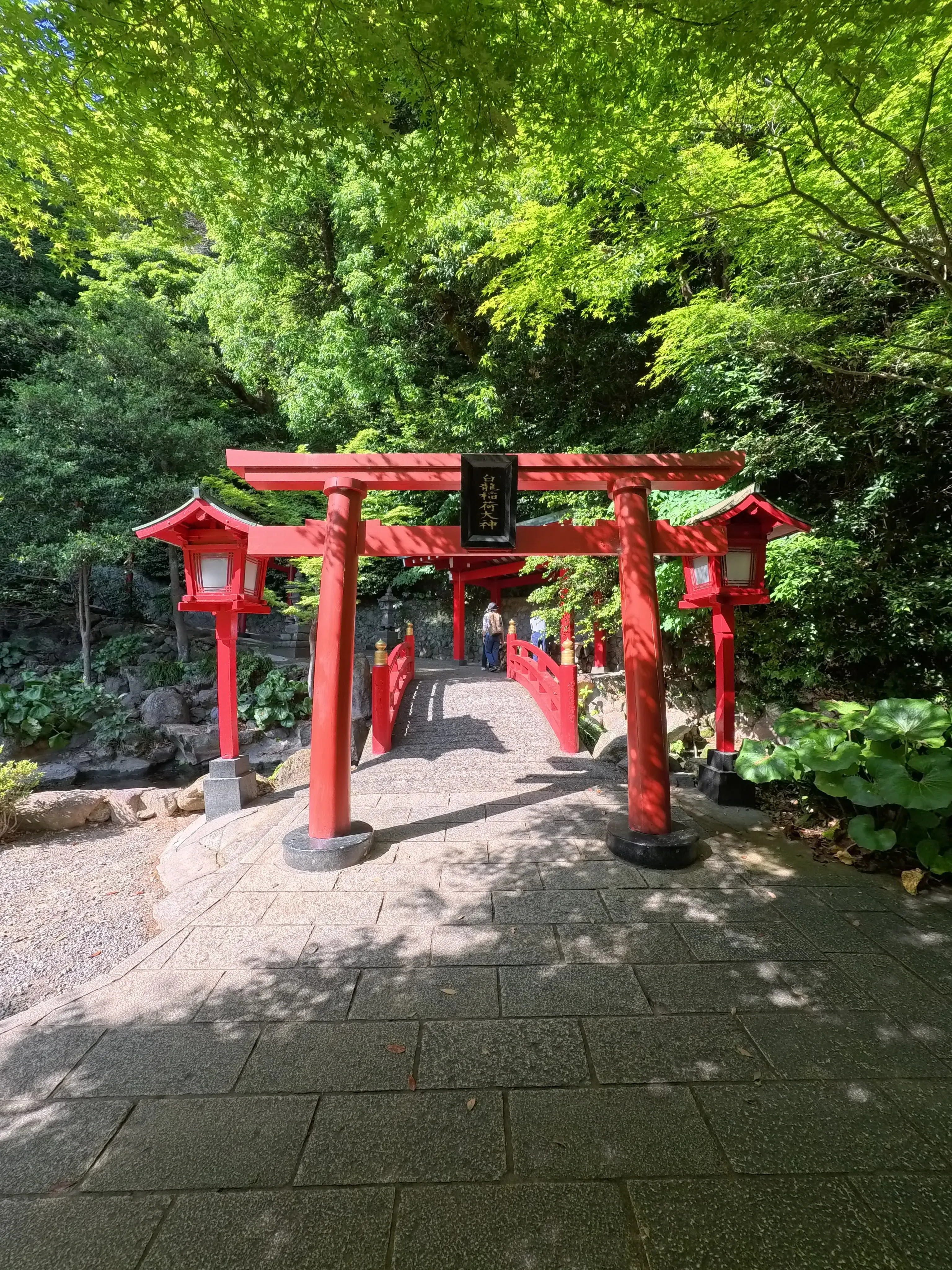
There is a shrine beyond it.
We collected another stamp before leaving.
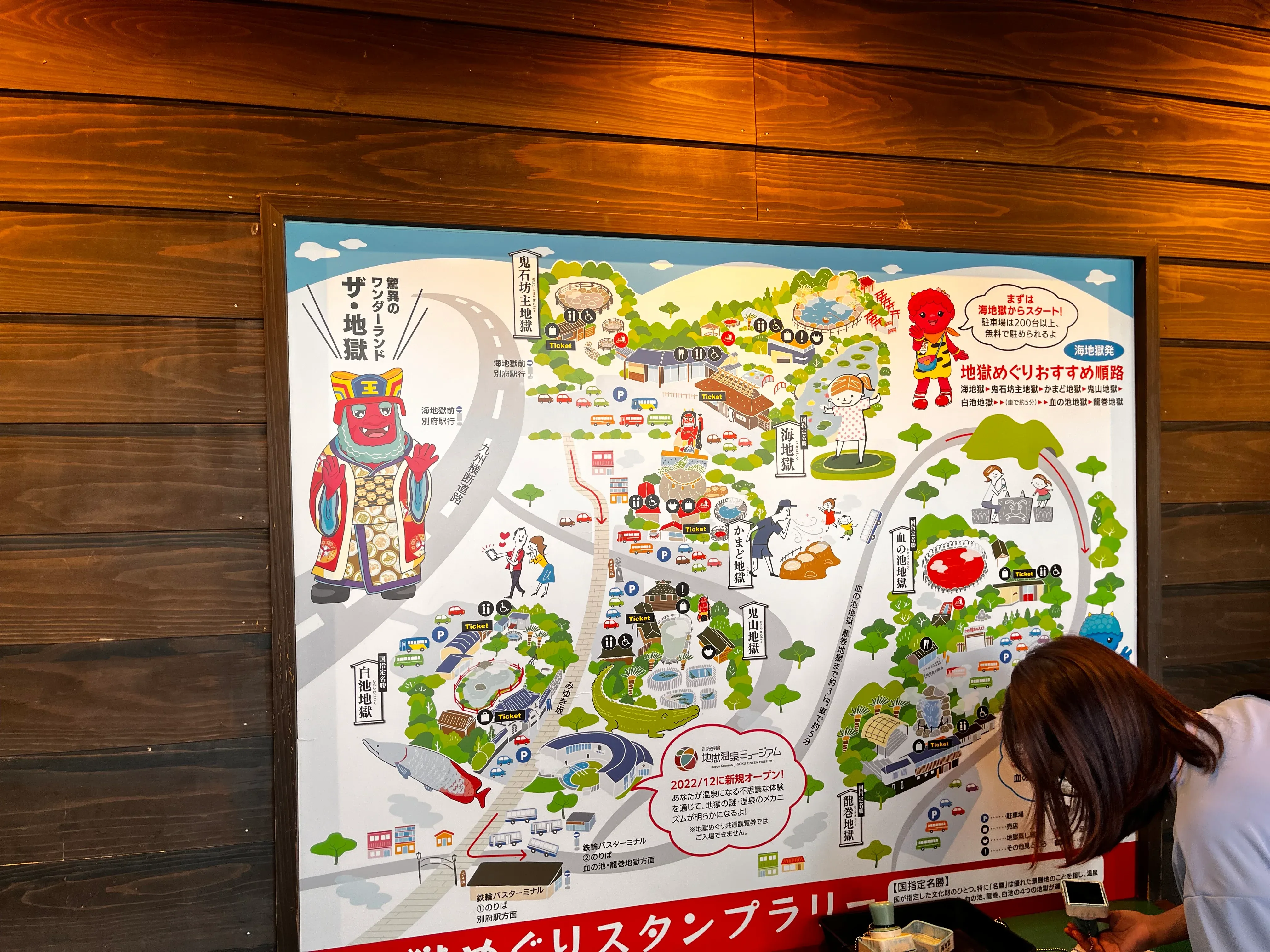
There was also a steam vent.
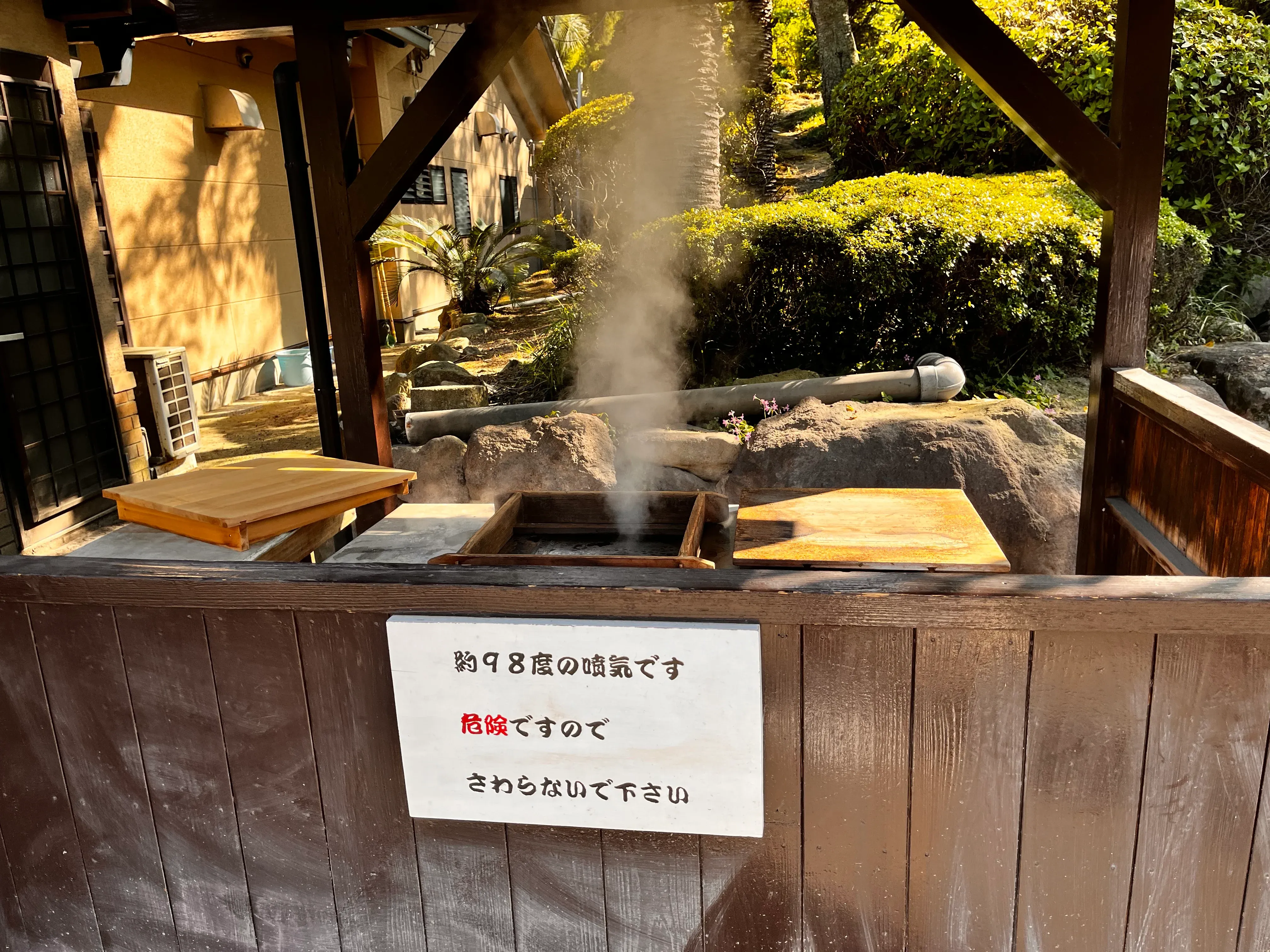
Oniishi Bozu Jigoku
Oniishi Bozu Jigoku is next door.
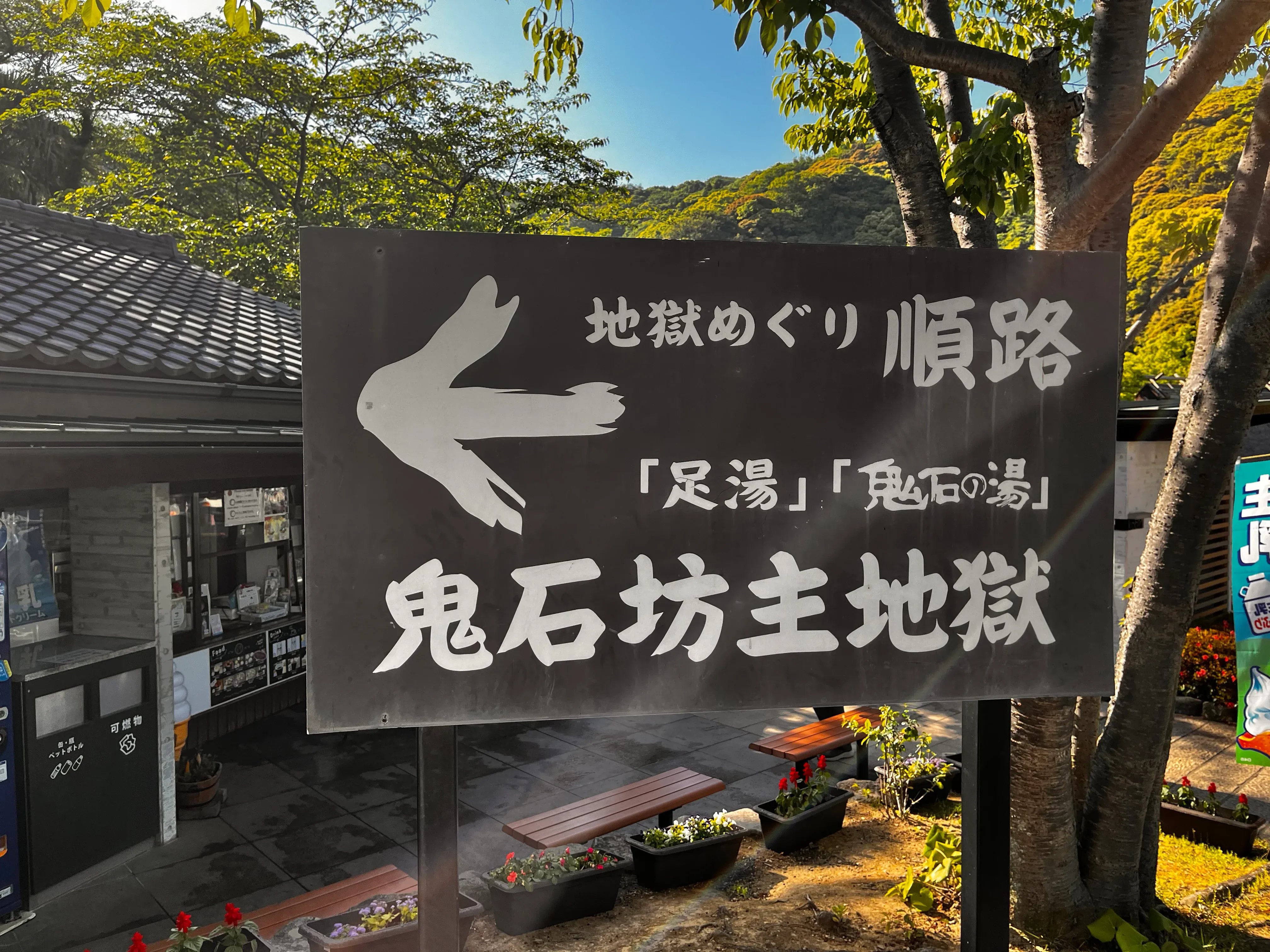
It is named after the mud bubbles, which are said to resemble the shaved heads of Buddhist monks.
I could not really see it. The comparison felt too abstract.
There are several smaller pools near the entrance.
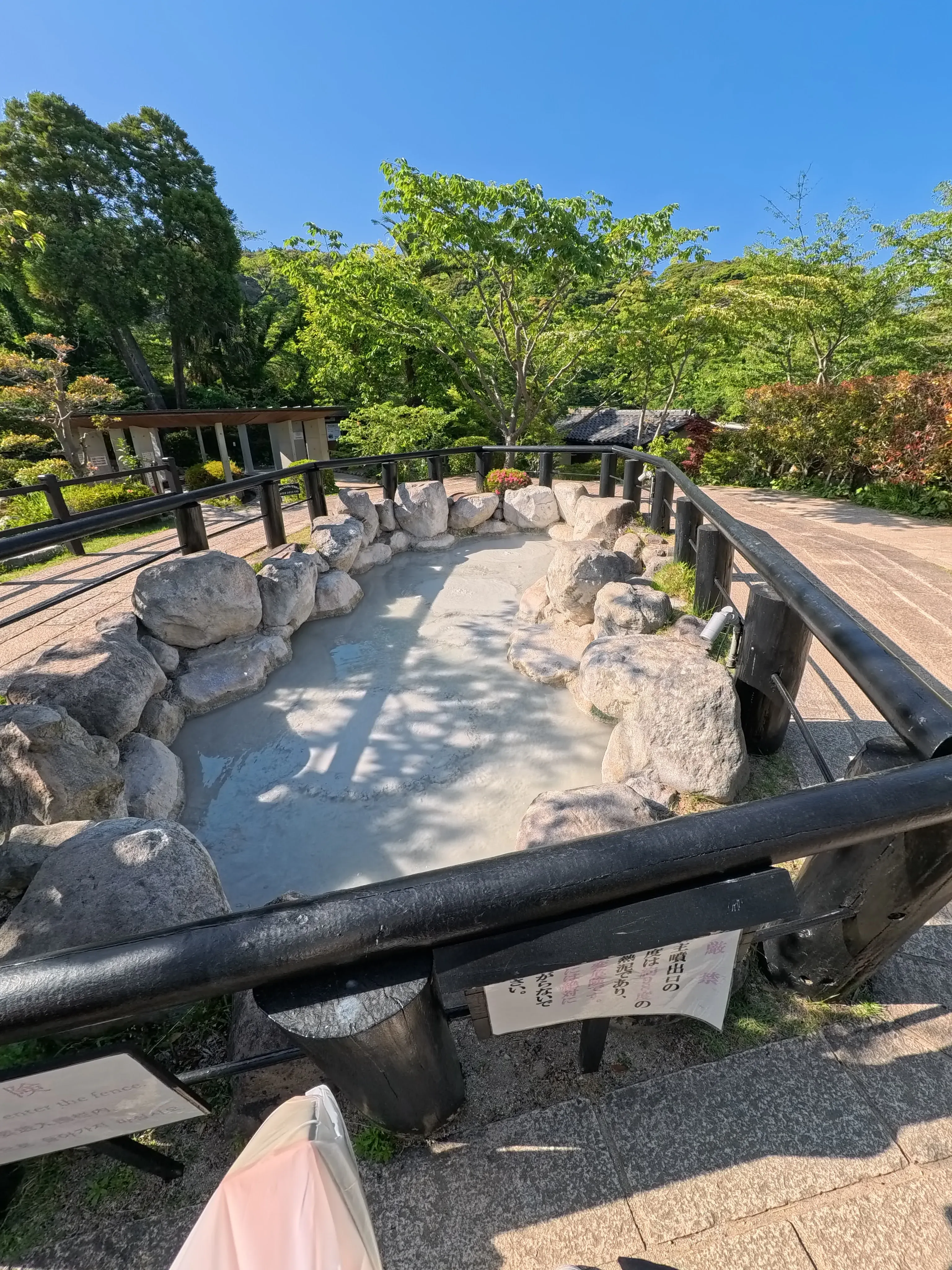
In the middle is this steaming rock area, which feels like a sauna.
Eventually, we reached the main pool.
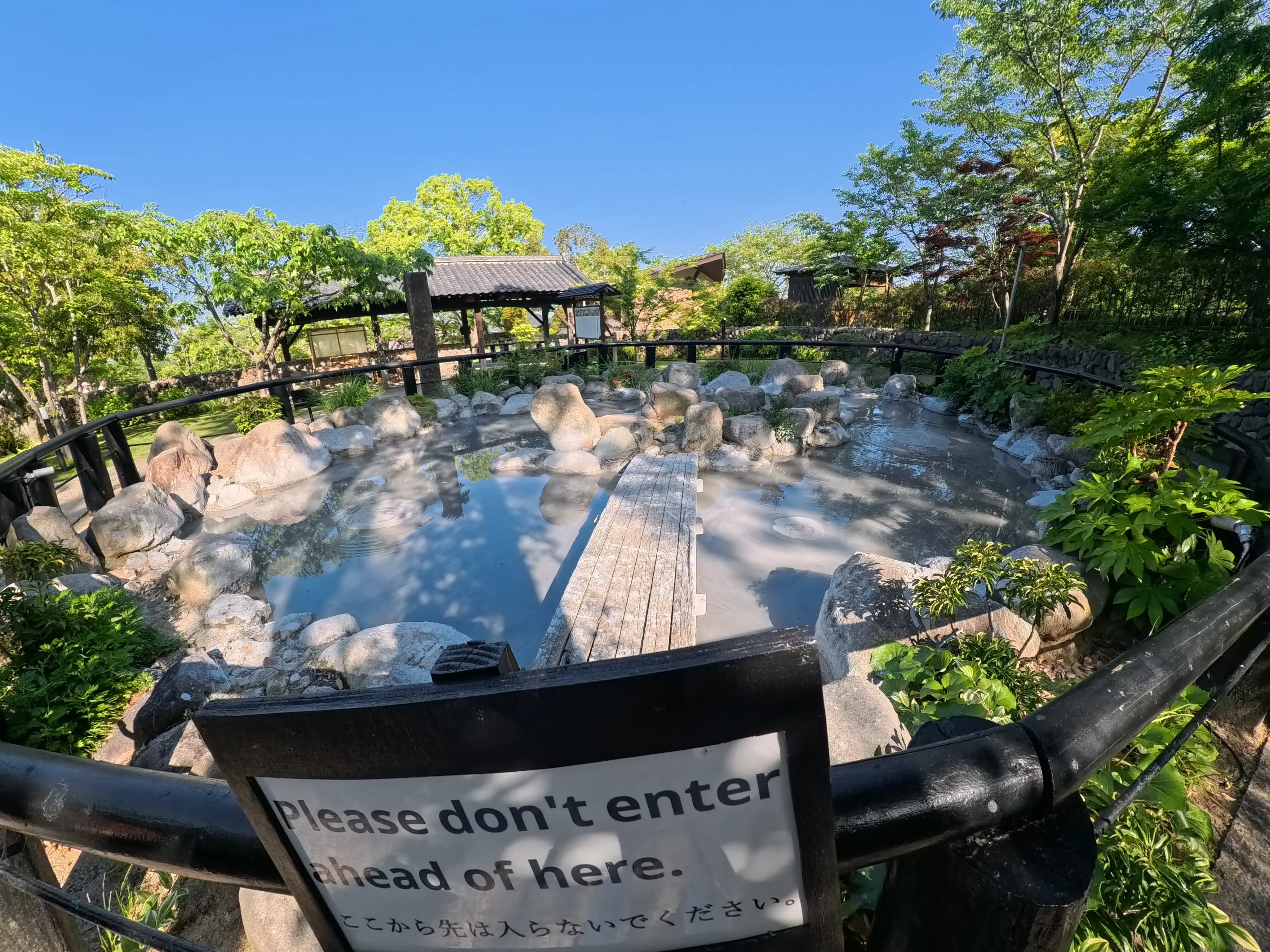
There is a foot bath near the exit.
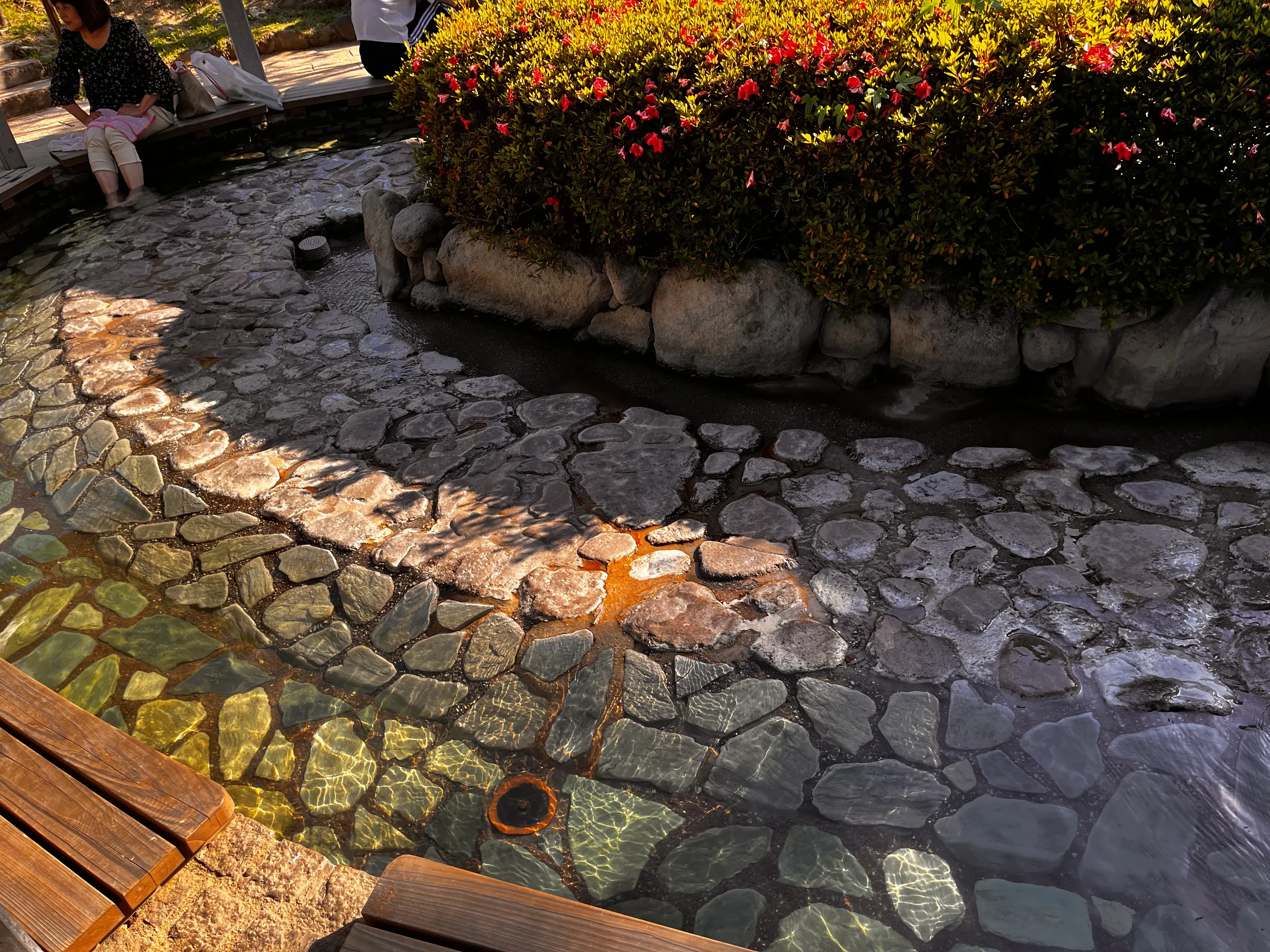
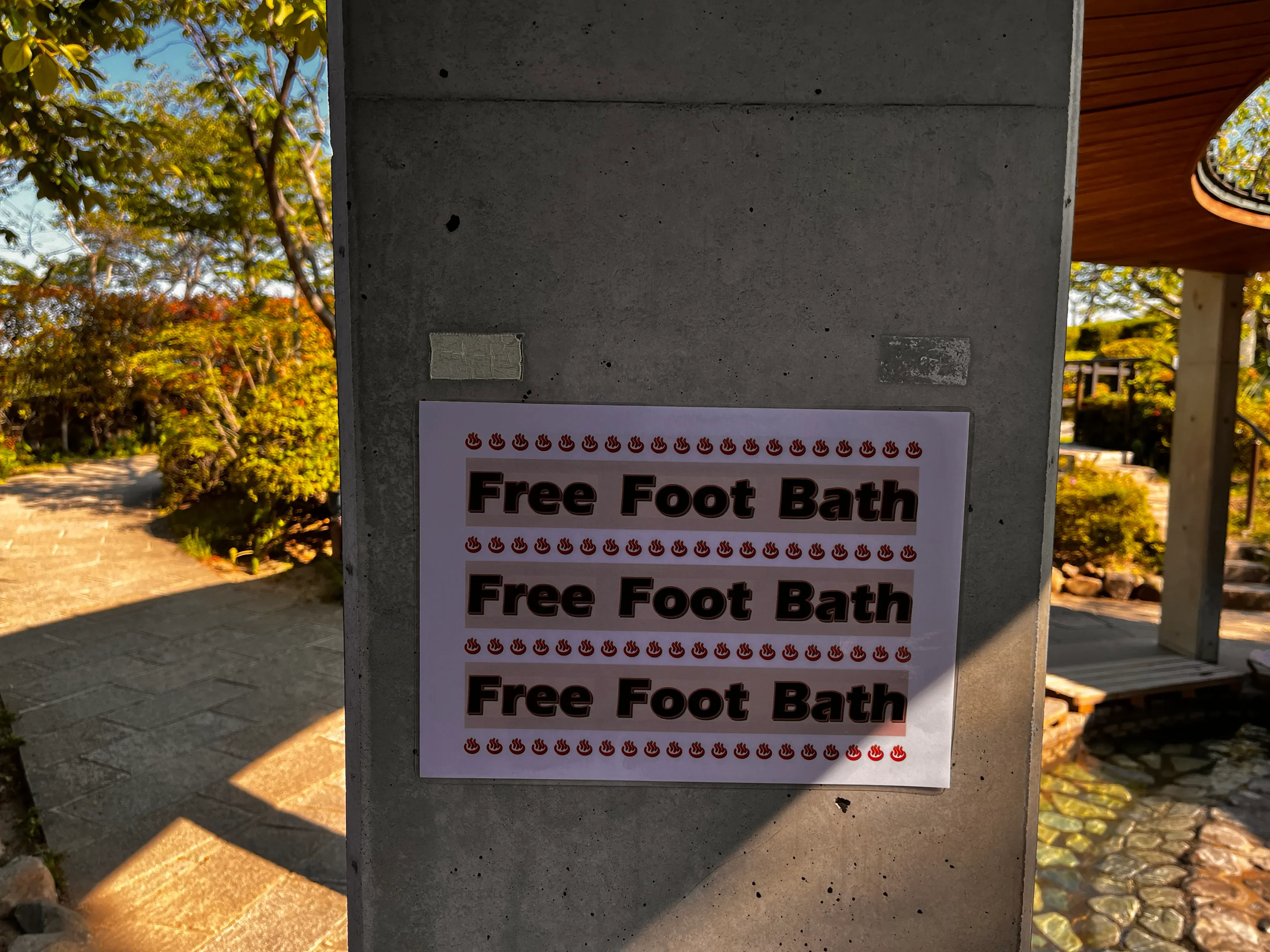
Kamado Jigoku
Continue downhill from there to Kamado Jigoku.
Honestly, it feels like miniature versions of several other hells gathered in one place.
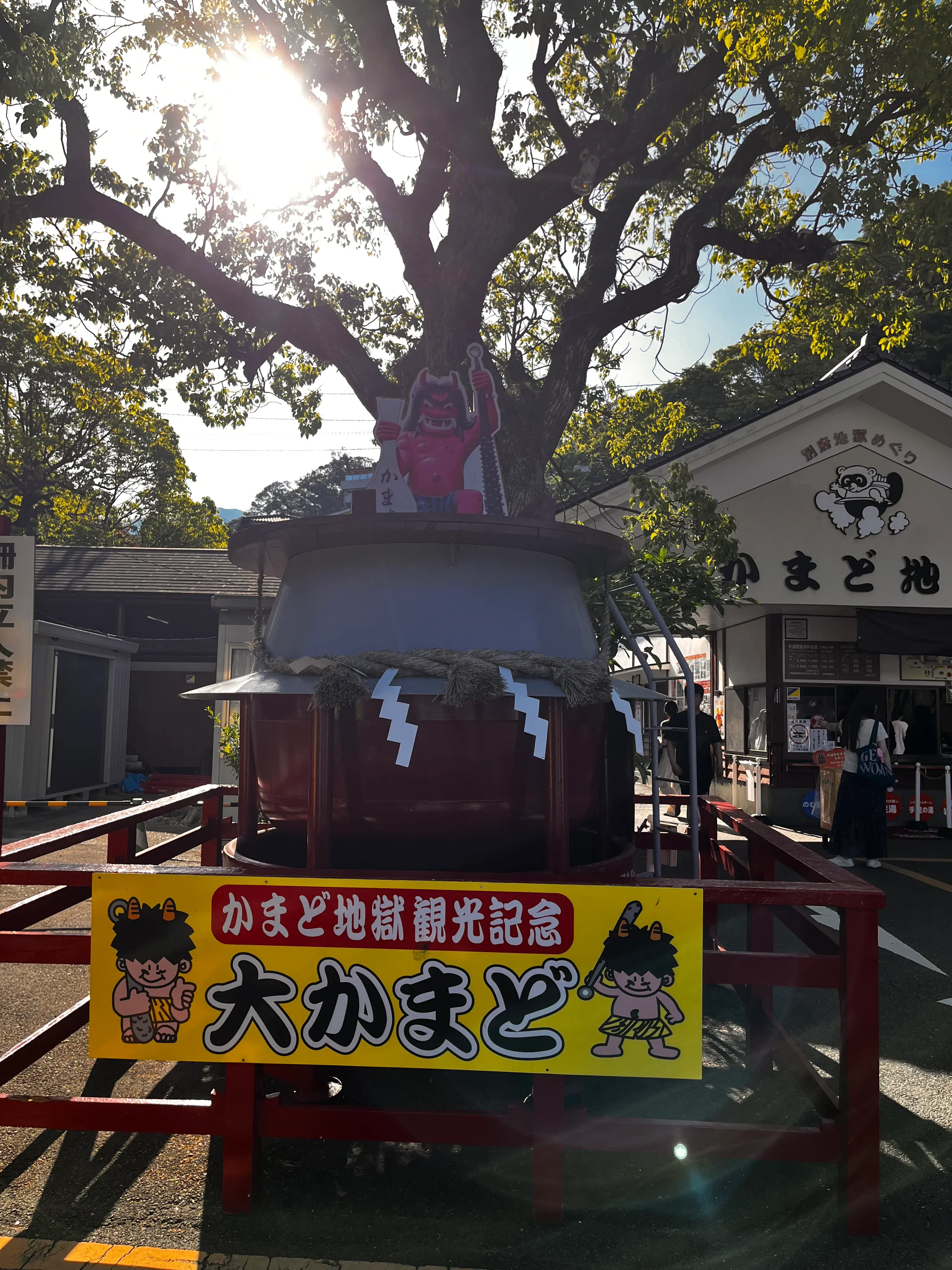
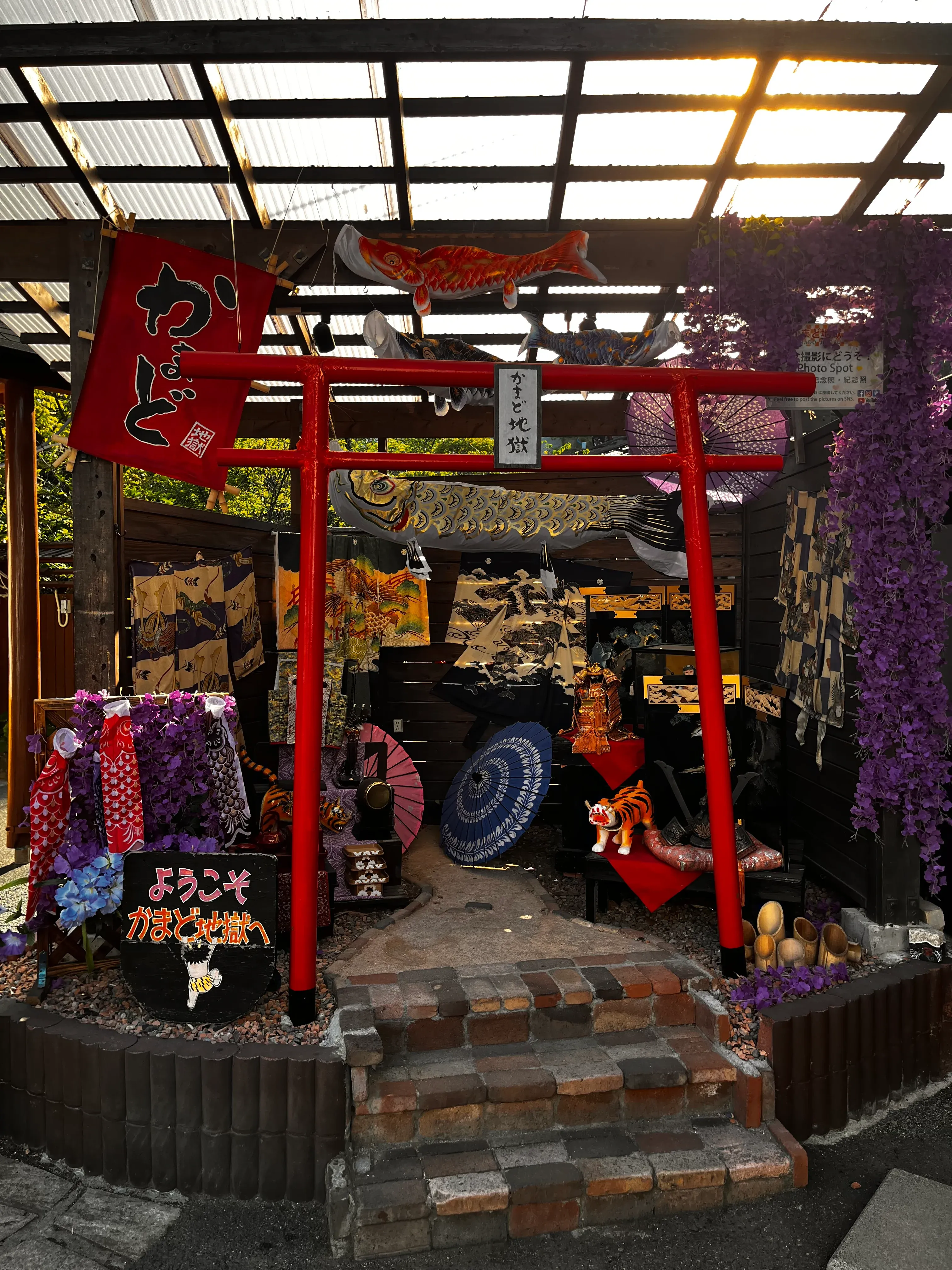
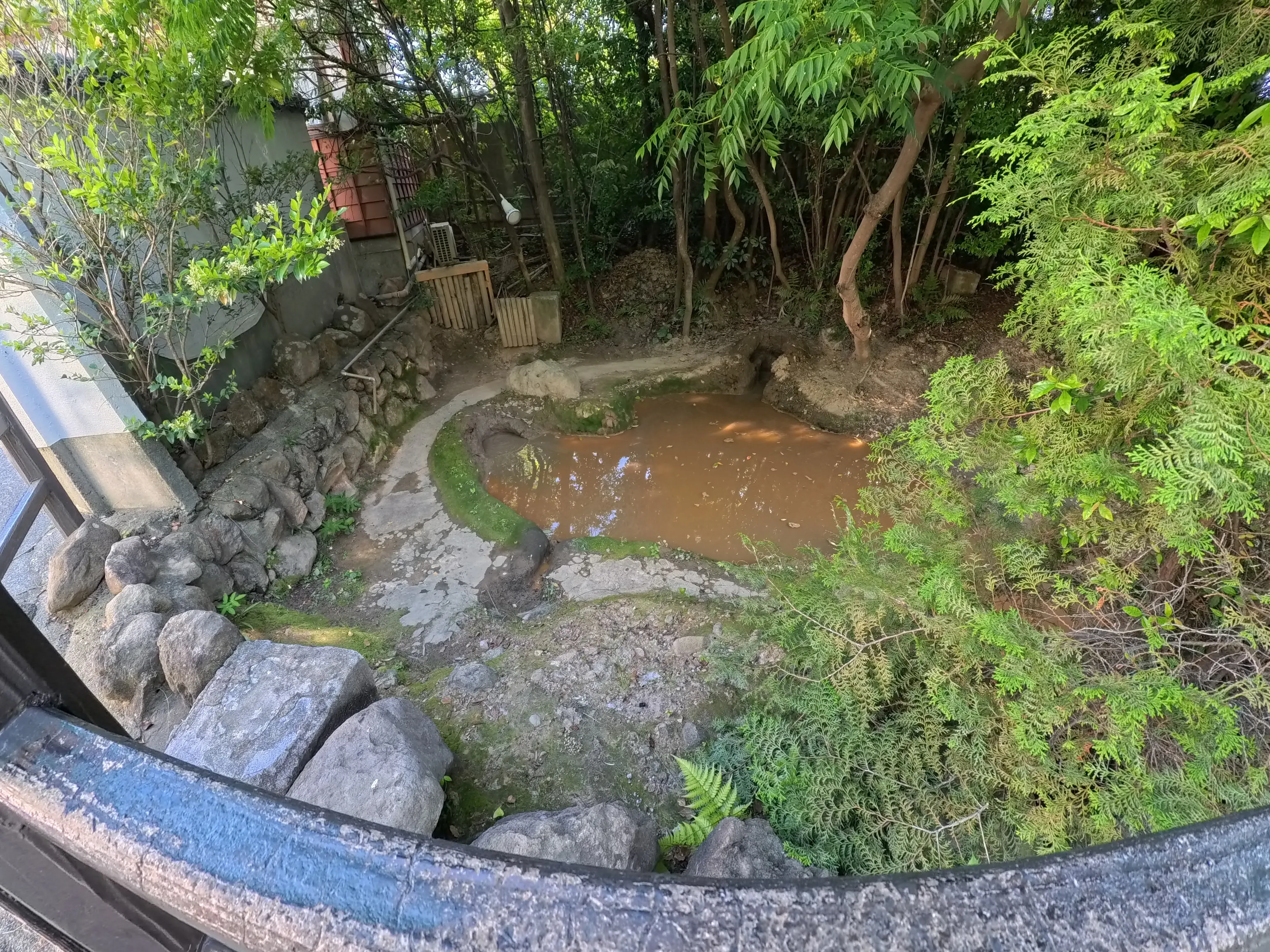
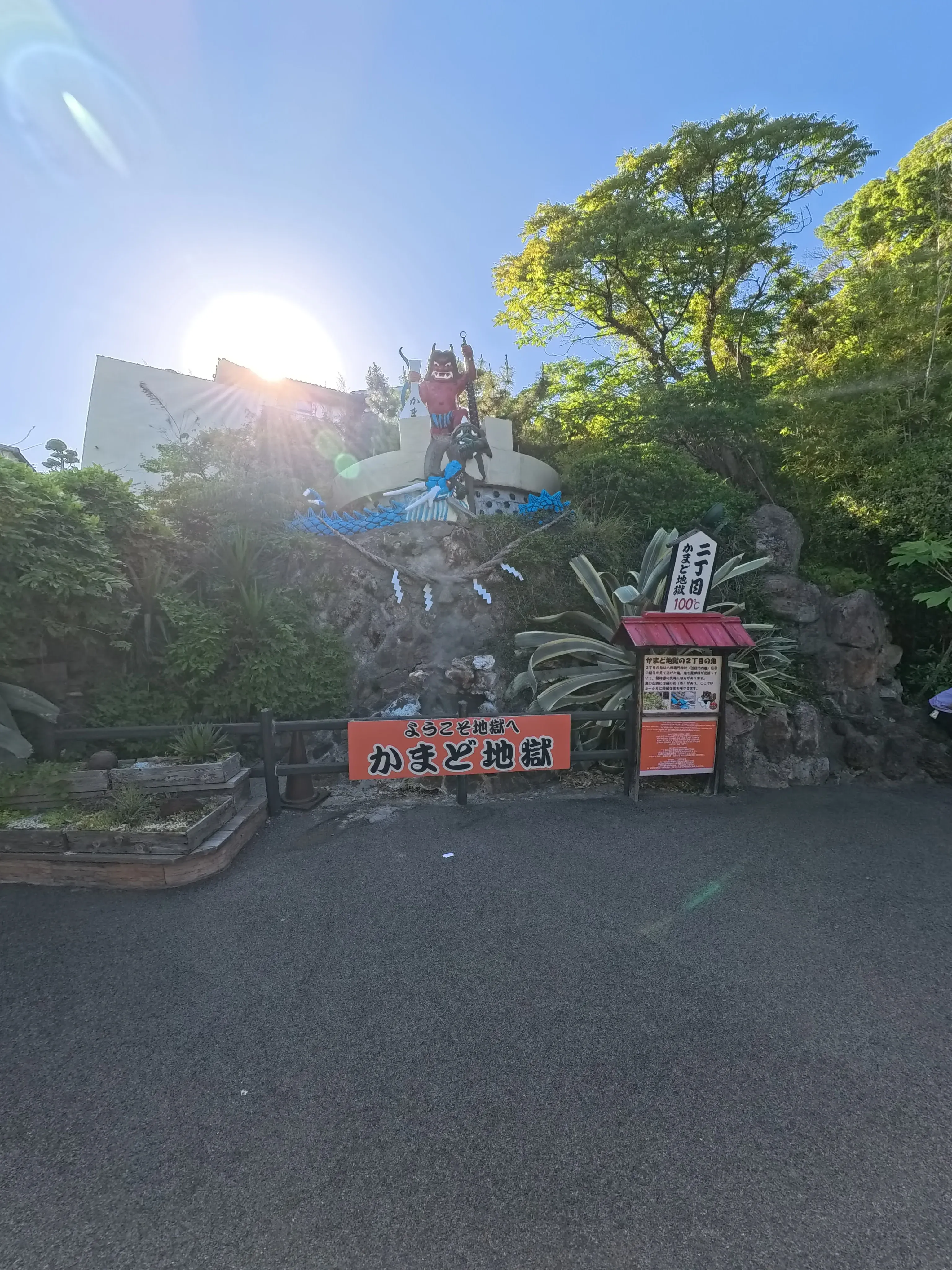
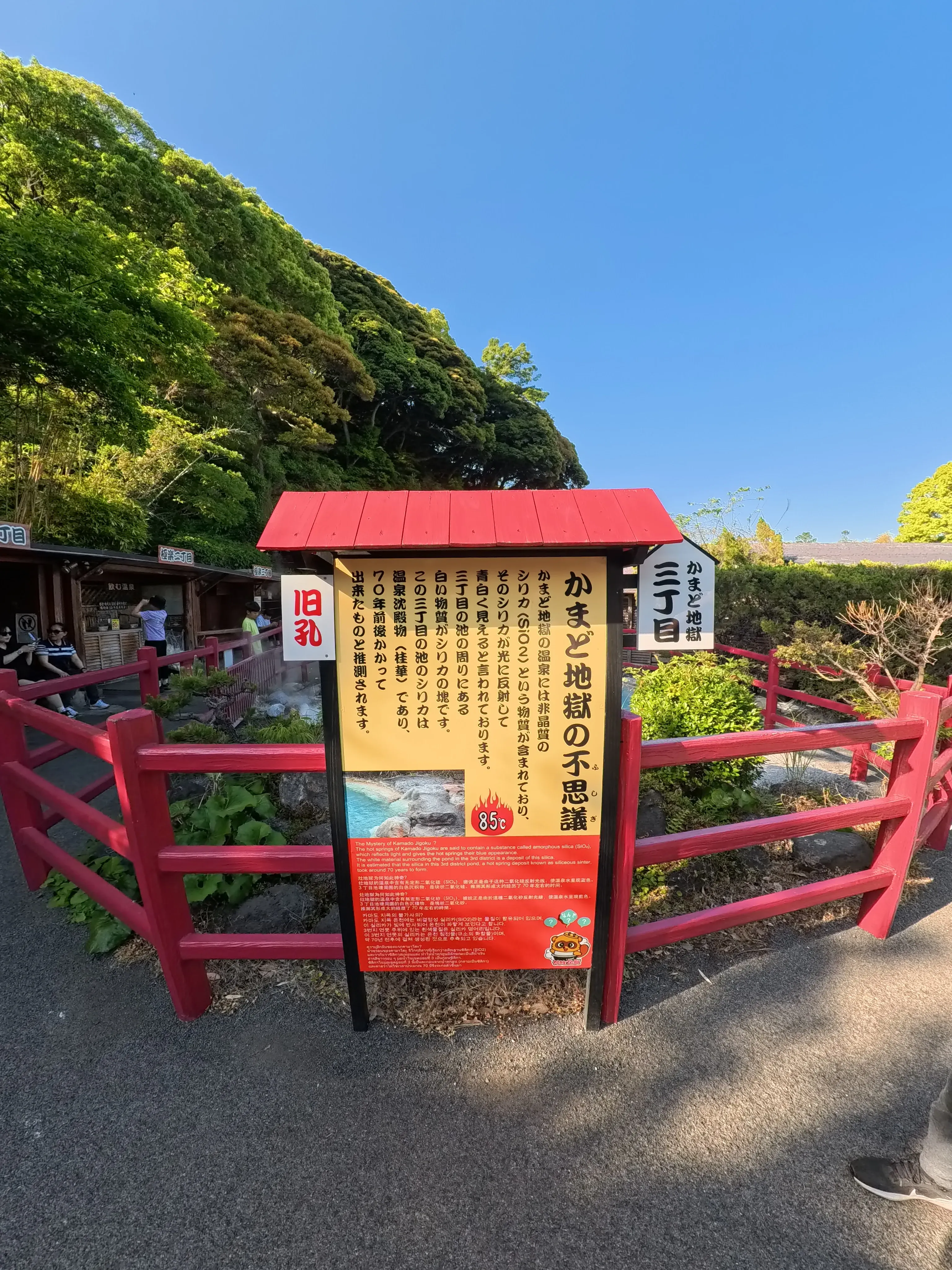
Its distinctive experiences include drinking hot-spring water and using the steam on your face.
You can also eat steamed eggs and ice cream.
There is another foot bath here.
We saw more flowers on the way out.
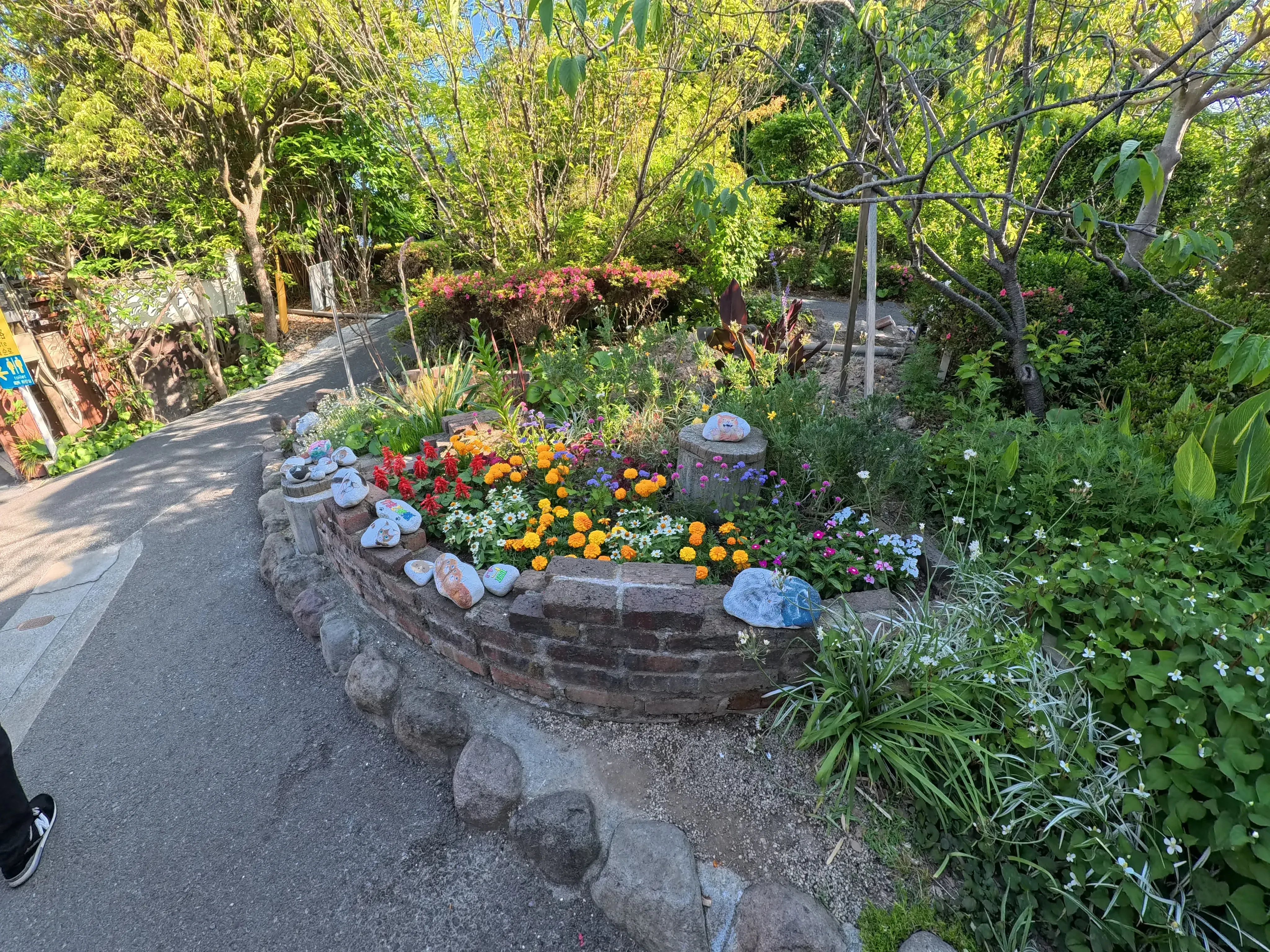
The souvenir shop has two stamps to choose from.
Shiraike Jigoku
With little time left, we hurried to Shiraike Jigoku.
It looked like a huge bowl of milky fish soup.
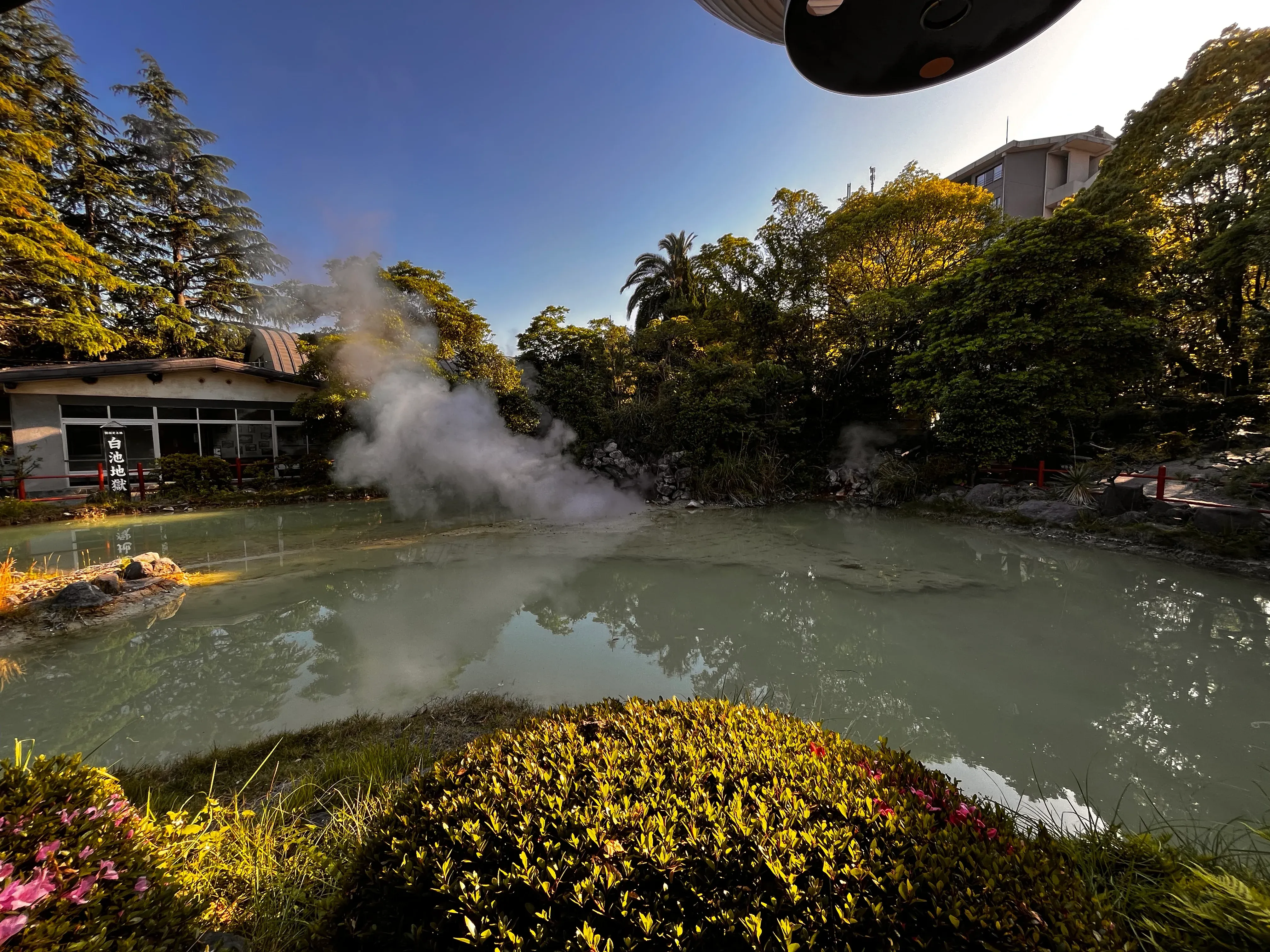
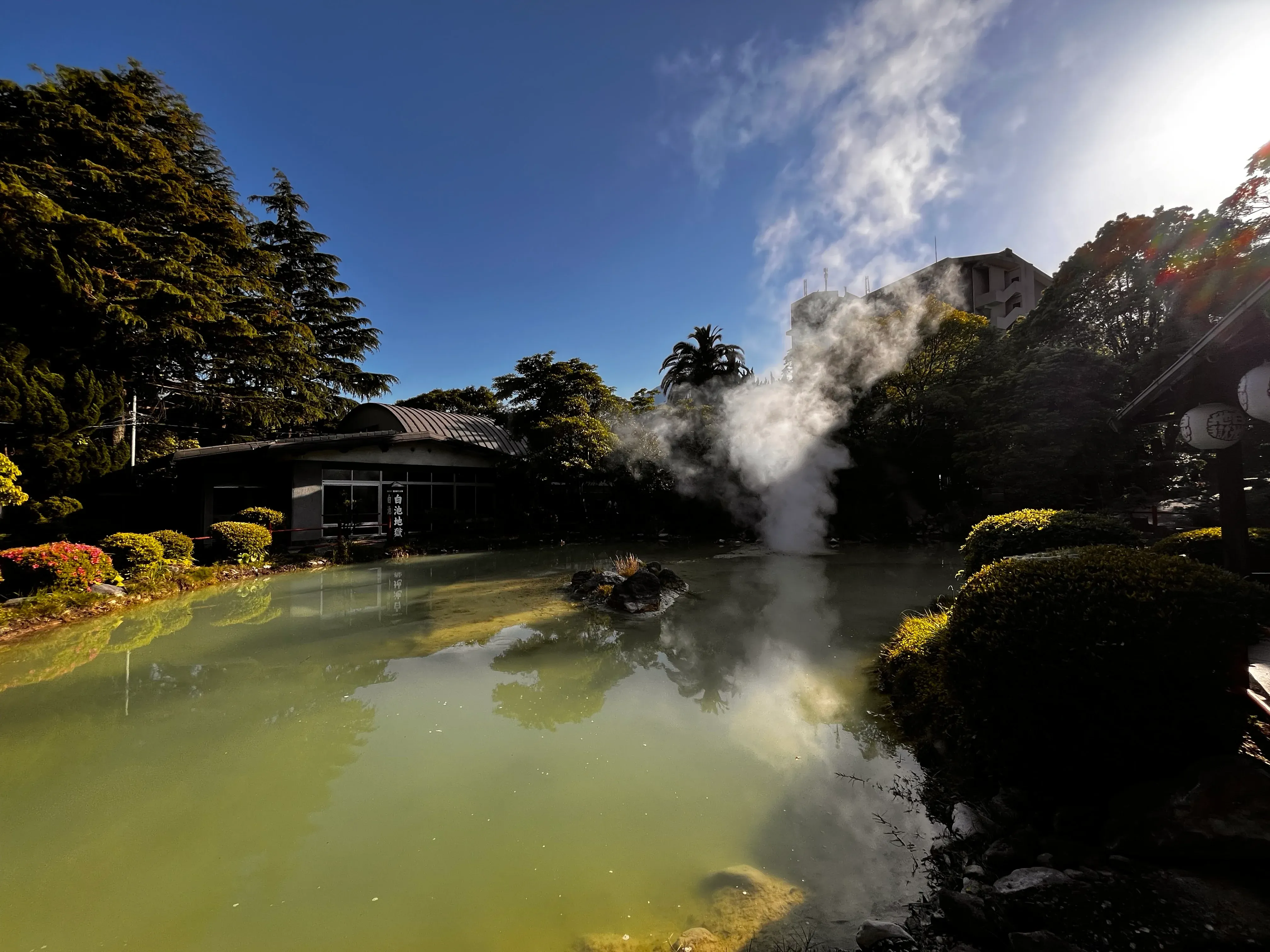
We barely had time to look around before rushing to Oniyama Jigoku, but it had just closed at 5:00 p.m.
It was disappointing that we could not complete the stamp collection.
The whole visit took more than three hours, excluding transport, and we still missed one hell. Allow half a day if you genuinely want to explore rather than quickly collect photos.
The road downhill eventually leads back to the bus stop.